English
Not every aluminum access panel works in every setting — and specifying the wrong type for a commercial project means mismatched finishes, failed inspections, or panels that sag under repeated use. The right selection comes down to three variables: where the panel installs, what the wall or ceiling surface is, and how often it needs to open. This guide maps the most common commercial application scenarios to the panel features that actually matter in each one.
Aluminum access panels are specified across a wide range of commercial environments — hotels, hospitals, commercial offices, industrial facilities, and residential complexes. Each environment creates different demands on the same basic product. A panel that performs well in a dry commercial ceiling will corrode or deform in a humid kitchen wall. A standard push-latch panel that works in a maintenance corridor is the wrong choice for a high-end hotel bathroom where the finish must be invisible.
Aluminum is the preferred frame material in commercial construction for reasons that go beyond corrosion resistance. Compared to steel, aluminum is roughly 65% lighter, which simplifies installation on ceiling applications and reduces structural load in large-format panel sizes. Its powder-coated surface requires no additional painting after installation, which matters on projects where MEP trades follow behind finishing crews.
The sections below address each major application scenario with the specific panel features that determine whether the installation succeeds.
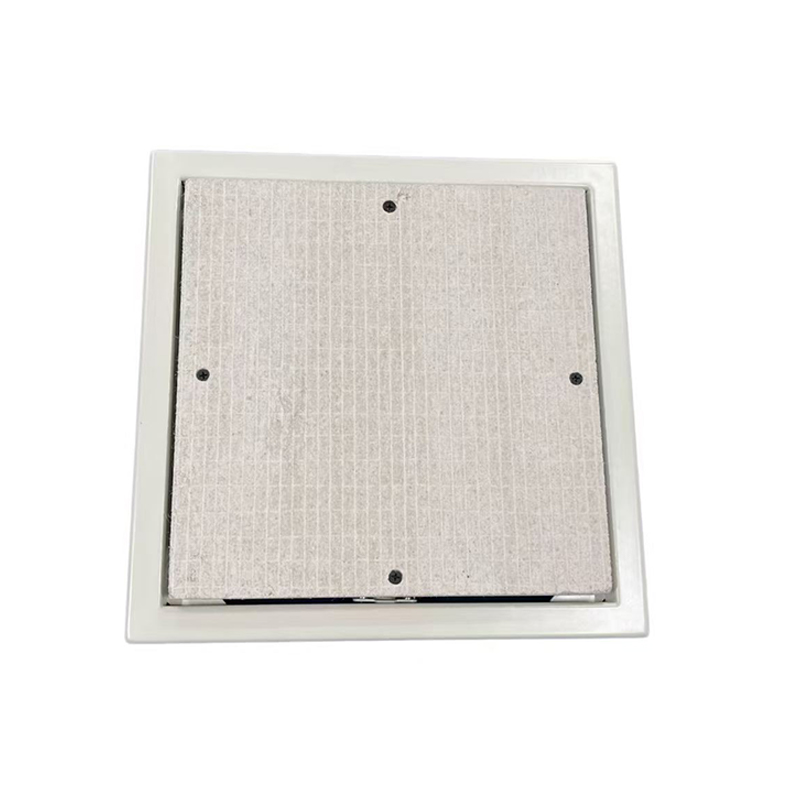
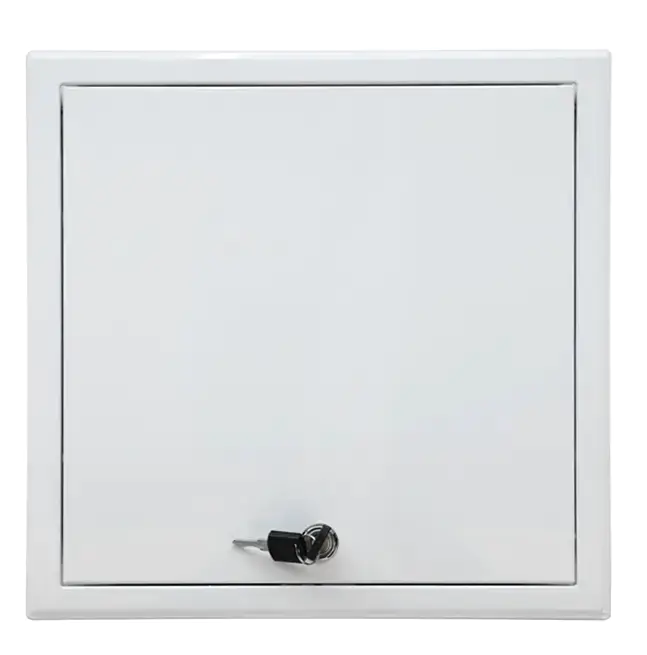
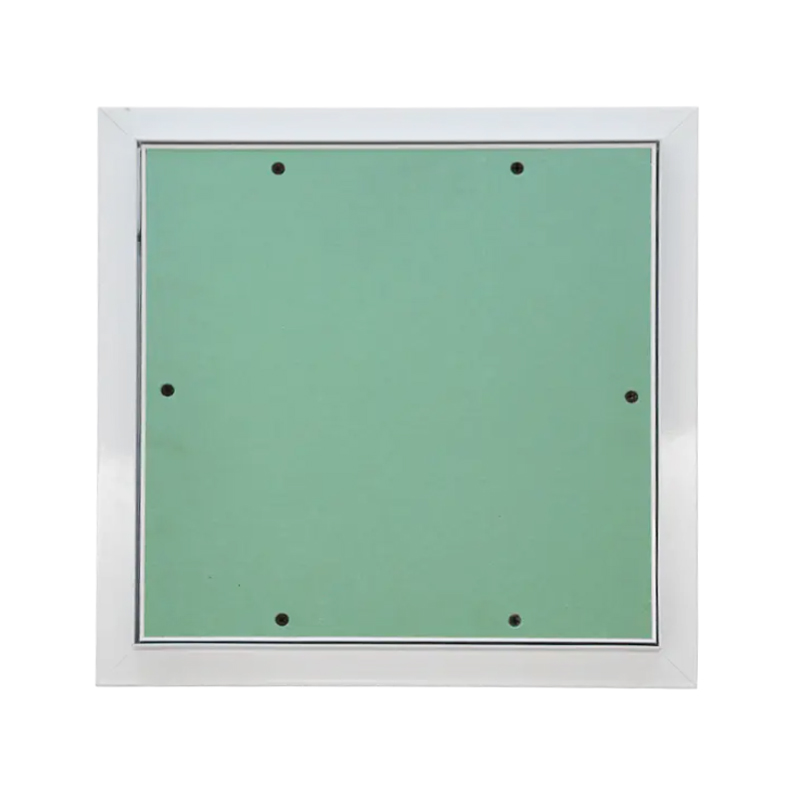
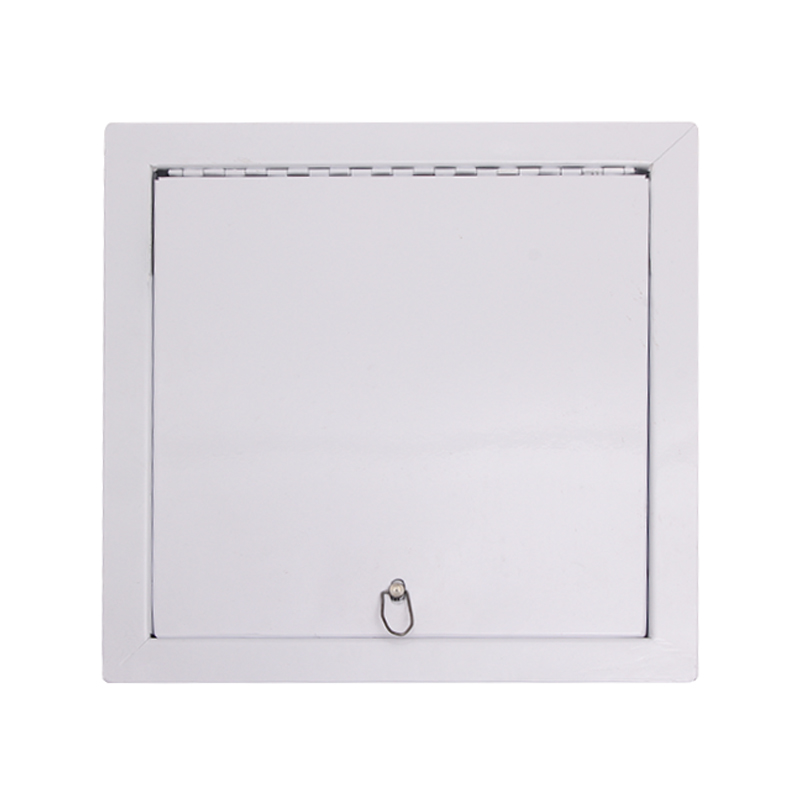
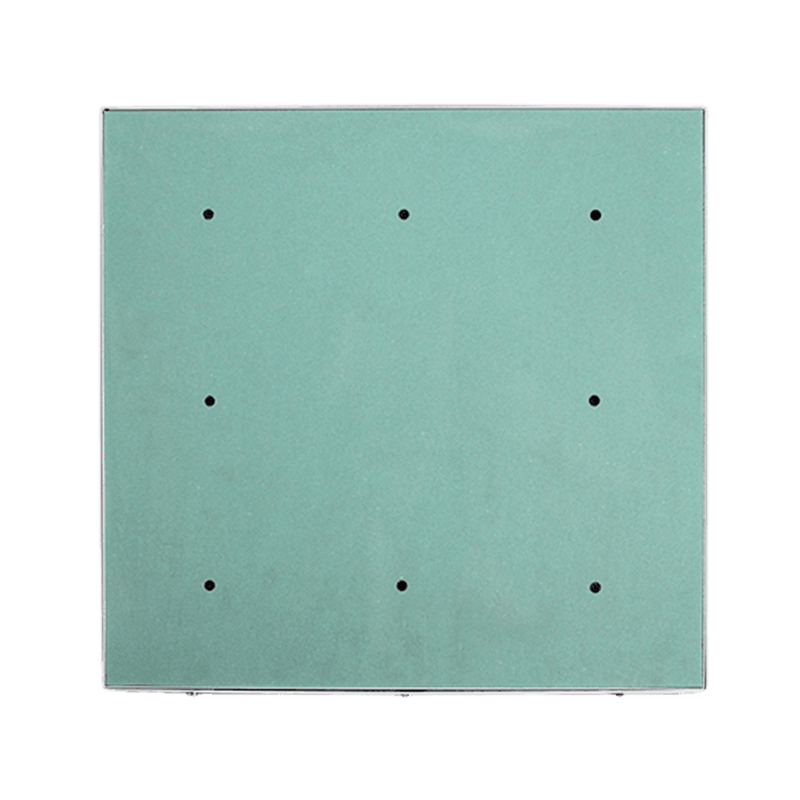
Drywall (gypsum board) is the most common wall surface in commercial interiors, and aluminum-framed drywall access panels are the default specification across offices, hotels, and multi-unit residential projects. The panel frame anchors to the rough opening in the drywall substrate; a gypsum board inlay is bonded to the door face so the panel paints out flush with the surrounding wall.
The key specification variables for drywall installations are:
For example, a multi-floor hotel project that needs access panels throughout guest room corridors and back-of-house utility walls would typically specify a standard aluminum drywall panel with a 12 mm moisture-resistant inlay and a concealed snap lock — providing a paintable, hardware-free finish that facilities staff can open with a push rather than a tool.
Ceiling-mounted aluminum access panels present a specific structural challenge: the panel and its inlay must be light enough not to stress the ceiling grid or the surrounding gypsum board, while still opening and closing reliably over years of maintenance cycles. This is why aluminum outperforms steel in ceiling applications — the weight reduction directly improves long-term hinge and latch performance.
For suspended ceiling installations, the critical specifications are:
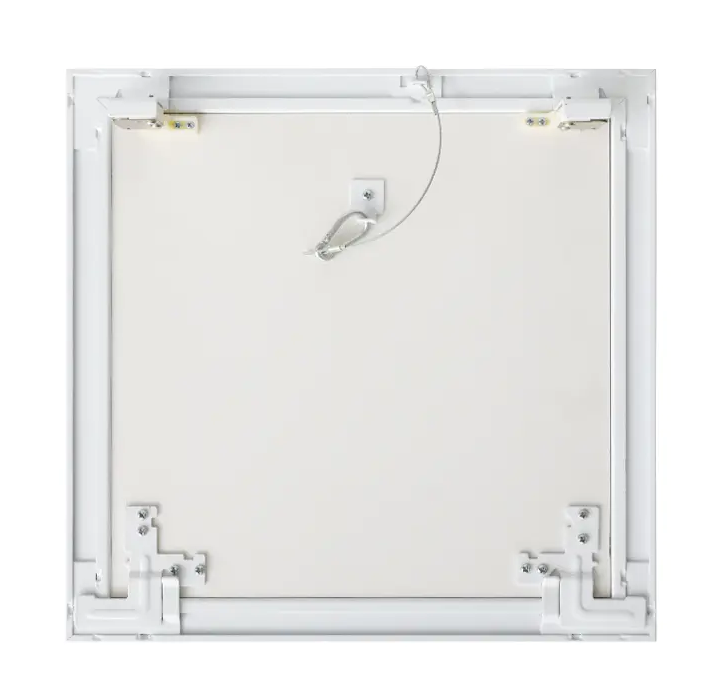
In a commercial office fit-out or hospital corridor, ceiling access panels above suspended T-bar or plasterboard ceilings serve as the primary maintenance route to HVAC ductwork, sprinkler heads, and electrical conduit. A panel with a built-in safety hook — such as the SA-AP335 from Shunshi's aluminum range, which integrates this feature into the standard aluminum frame — avoids the need for a separate safety cable while keeping the door controlled during access.
Commercial kitchens, shower rooms, pool plant rooms, and exterior-adjacent walls are the highest-risk environments for access panel failure. Standard panels installed in these areas without moisture-appropriate specifications will develop surface corrosion, inlay delamination, and hinge stiffness within one to two years of installation — all of which create maintenance problems and require replacement.
Aluminum frames hold a structural advantage in wet environments because aluminum does not rust. However, the specification still needs to address the door inlay material and the hardware. The correct specification for wet-area aluminum access panels includes:
For tile-finished wet walls — bathrooms, shower enclosures, and commercial kitchen splash zones — an aluminum panel with a cement board inlay provides the correct substrate for tile bonding over the door face. The SA-AP337 addresses exactly this scenario, using a cement board inlay compatible with standard tile adhesive systems so the access point integrates visually into the tiled wall surface.
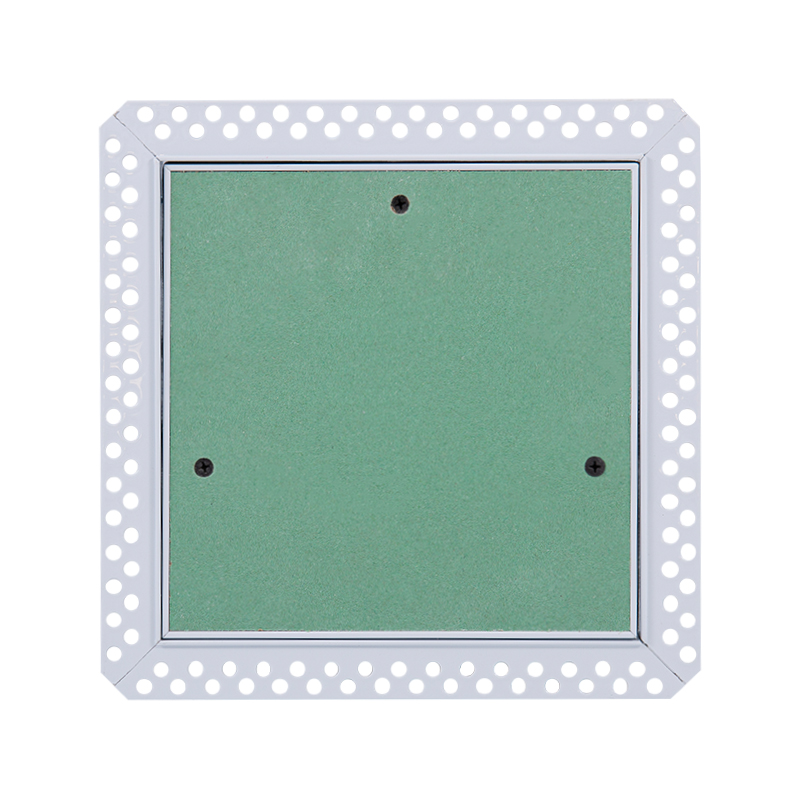
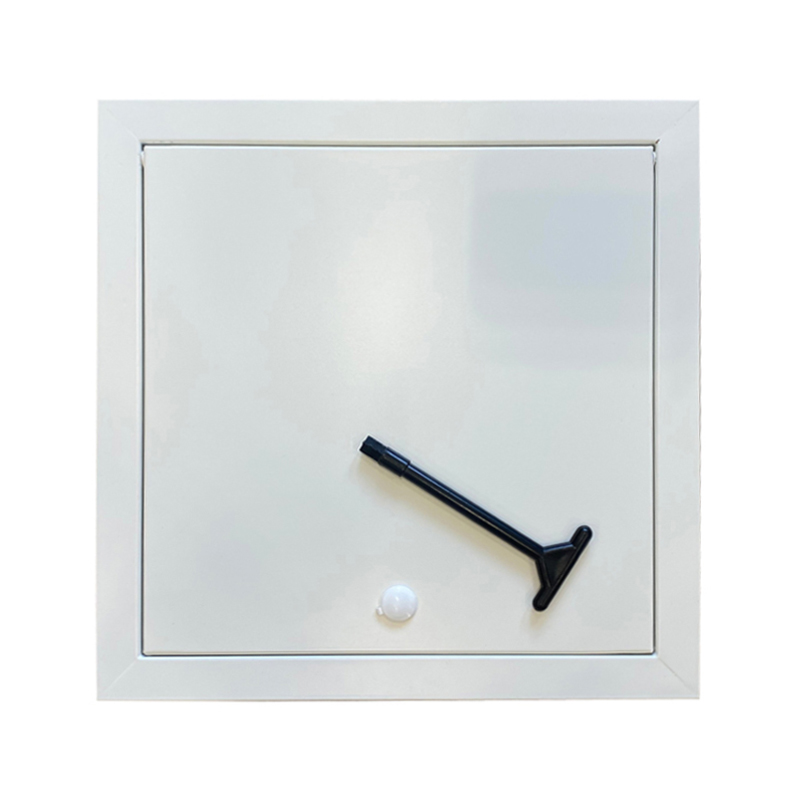
In luxury hotels, high-end residential developments, formal reception areas, and healthcare facilities with designed interior environments, visible hardware on an access panel is a specification failure. These projects require panels where the frame reveal, latch, and hinges are fully concealed — so that the only visible element after installation is the grout line or paint seam between the panel and the surrounding surface.
The design requirements for these environments drive two specific panel features:
The sliding-open format — such as the SA-AP338 and SA-AP320 — offers a different approach to concealment suited to spaces where a hinged door would conflict with adjacent fixtures or furniture. Instead of swinging open into the room, the panel slides laterally along the wall surface, which can be the only viable opening method where clearance in front of the panel is limited by cabinetry, shelving, or built-in furniture.
Not every access point is a standard rectangular opening in a flat wall. Two scenarios come up regularly in commercial and industrial projects that require non-standard panel configurations.
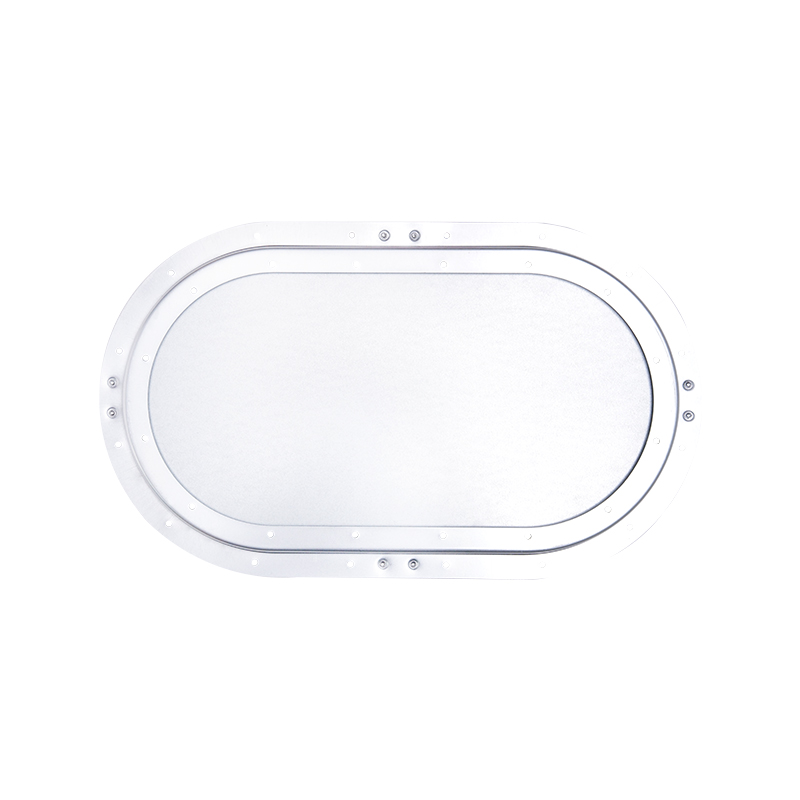
Circular access panels are specified where the wall surface is curved, where the access point falls on an architectural column, or where the designer has specifically requested a non-rectangular format as part of the interior concept. The SA-AP41R circular aluminum panel uses a 1 mm aluminum profile in a circular format for ceiling or drywall installation — available in white powder coat for standard interior finishes. The sizing must be confirmed against the diameter of the utility access point below, as circular panels cannot be adjusted post-installation the way rectangular panels can be shimmed.
In industrial facilities, plant rooms, and commercial spaces where panels are accessed frequently by maintenance staff, the connection between the door frame and the inlay must withstand repeated opening cycles without loosening. Riveting connection panels — such as the SA-AP361 and SA-AP361M — use a mechanically riveted joint rather than adhesive bonding between the frame and inlay. This produces a structurally stronger assembly that does not rely on adhesive integrity over time, making it appropriate for applications where the panel is opened multiple times per week.
The table below summarizes the application-to-panel mapping covered in this guide.
| Application | Key Requirement | Panel Feature to Specify |
|---|---|---|
| Standard drywall wall | Flush finish, paintable surface | Gypsum inlay (matched thickness), concealed snap lock |
| Suspended ceiling | Lightweight, door retention | Aluminum frame, safety hook on sizes >300 mm |
| Wet areas / bathrooms | Corrosion resistance | Moisture-resistant inlay, stainless steel hardware |
| Tiled walls (kitchens, bathrooms) | Tile-compatible substrate | Cement board inlay, aluminum frame |
| Design-sensitive interiors | No visible hardware | Flush/concealed frame, push-to-open latch |
| Limited clearance (cabinets, furniture) | No swing clearance available | Sliding-open panel format |
| Curved walls / columns | Non-rectangular format | Circular aluminum panel |
| Industrial / high-frequency access | Structural joint durability | Riveting connection frame construction |
Most aluminum access panel failures in commercial projects trace back to three recurring errors at the specification stage:
An aluminum access panel provides a concealed, openable entry point in a wall or ceiling surface, allowing maintenance access to the plumbing, electrical wiring, HVAC ductwork, or other building services installed behind the finished surface. Aluminum is specified for this purpose because it is lightweight, corrosion-resistant, and compatible with standard powder-coat finishes that paint out flush with surrounding drywall or plaster.
Common commercial sizes run from 150 mm × 150 mm for small utility access points up to 600 mm × 600 mm for larger service areas. The most frequently specified sizes in multi-floor commercial projects are 300 mm × 300 mm and 400 mm × 400 mm, which accommodate standard plumbing valve and junction box access. Custom sizes are available from most manufacturers when standard dimensions do not fit the rough opening.
Yes, with the correct inlay material. The aluminum frame itself is corrosion-resistant, but the gypsum board inlay must be moisture-resistant or waterproof grade to handle repeated humidity exposure. For tile-finished wet walls, a cement board inlay provides the correct substrate for direct tile bonding over the door face. Hardware should also be specified in stainless steel or aluminum to prevent hinge corrosion in high-humidity environments.
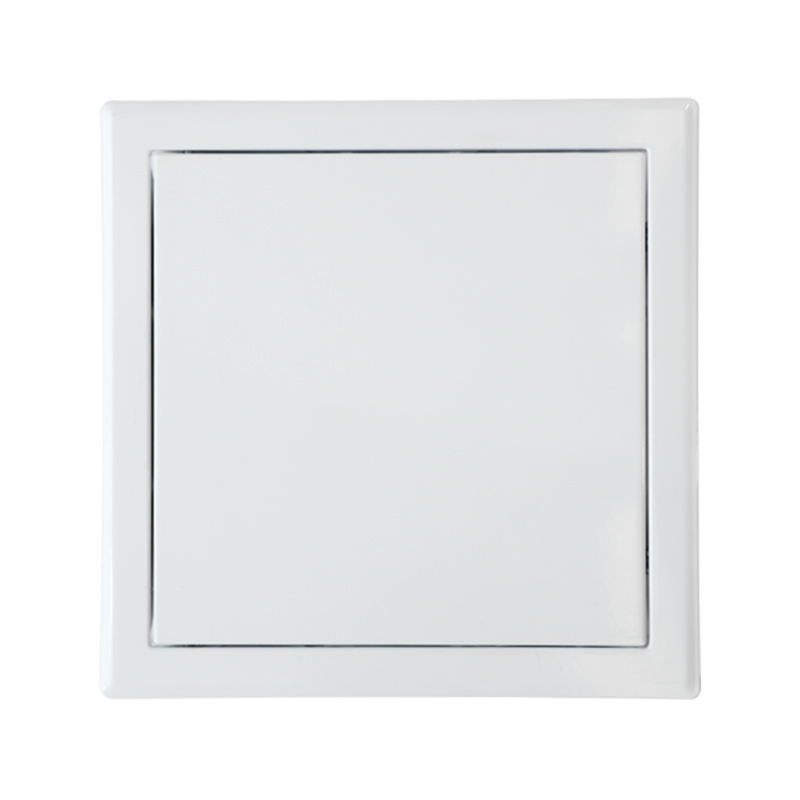
A hinged panel swings open like a door, requiring clear space in front of the opening equal to at least the width of the panel. A sliding panel moves laterally along the wall surface without projecting into the room, making it suitable for installations behind built-in furniture, kitchen cabinetry, or in service corridors where swing clearance is unavailable. Both types can be finished with gypsum or PVC board inlays for a flush, paintable surface.
The main trade-off is weight versus load capacity. Aluminum is significantly lighter and inherently corrosion-resistant, making it the default choice for ceiling applications, wet environments, and projects where surface finish quality matters. Steel is heavier and stronger, making it appropriate for high-traffic floor-mounted applications or fire-rated assemblies requiring robust frame integrity. For most interior wall and ceiling applications in commercial construction, aluminum is the more practical specification.
The aluminum frame typically comes with a white powder-coat finish that requires no additional painting. The gypsum board inlay on the door face, however, should be painted along with the surrounding wall to achieve a fully flush visual result. Panels with PVC board inlays are factory-finished and generally require no painting at all — making them a time-saving option on projects where post-installation painting schedules are compressed.
Yes. Most commercial aluminum access panel manufacturers offer custom sizing to accommodate non-standard rough openings, unusual wall thicknesses, or project-specific design requirements. Custom sizing typically requires confirmed drawings or sample dimensions and may carry minimum order quantities depending on the manufacturer. Lead times for custom sizes should be confirmed before the panel is written into a procurement schedule.

Contact Us
SHUNSHI provides a range of technical support services to ensure that customers are able to properly select, install and maintain these products.
Products
Access Panels GuideContact
Tel: 86-15988108762
86-572-8298792
Fax: 86-572-8298792
E-mail: [email protected]
No.281 Mingzhu Main Road, Leidian Town, Deqing, Huzhou, Zhejiang, China, 313219

 English
 Español
 عربى
عربى