English
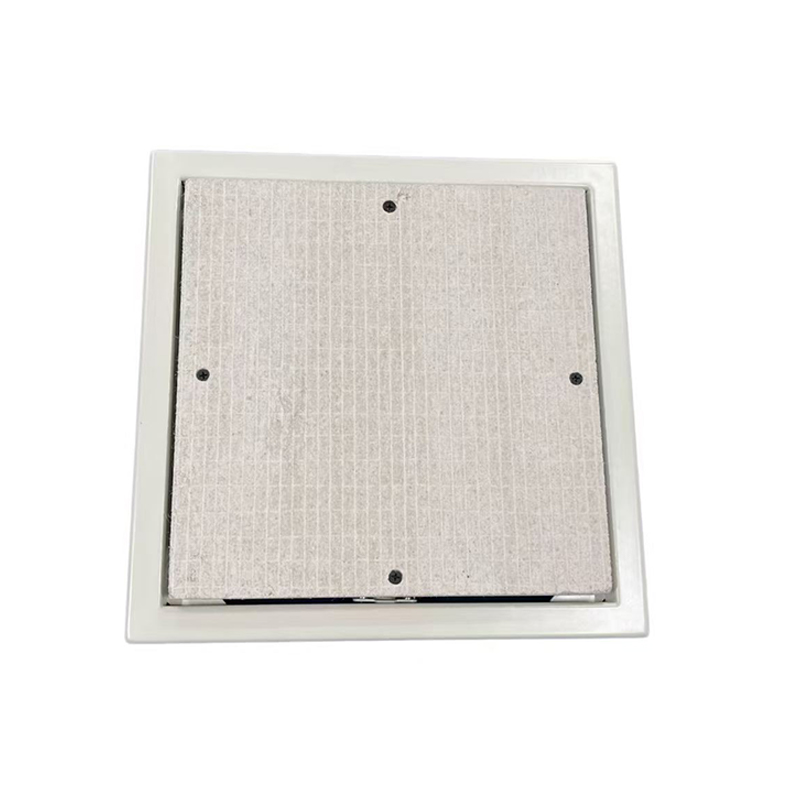
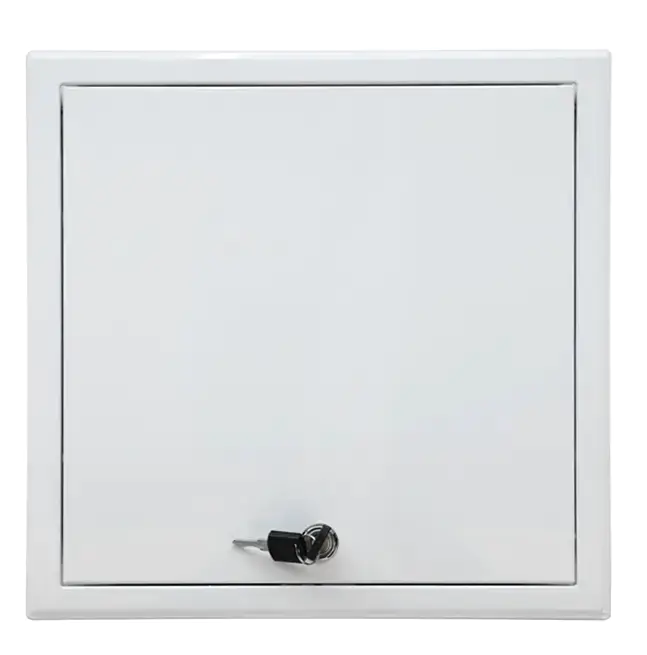
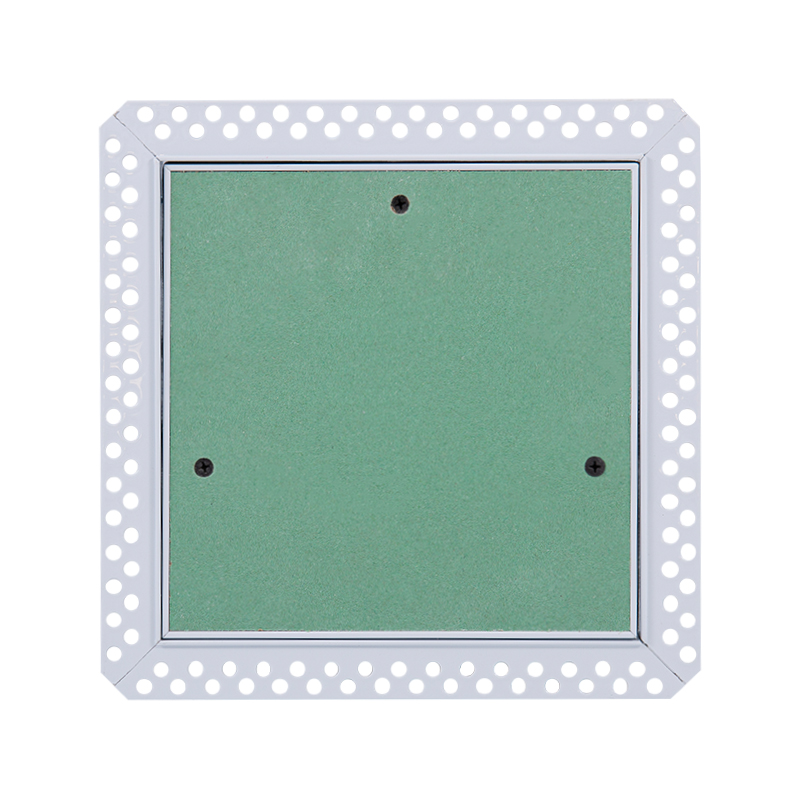
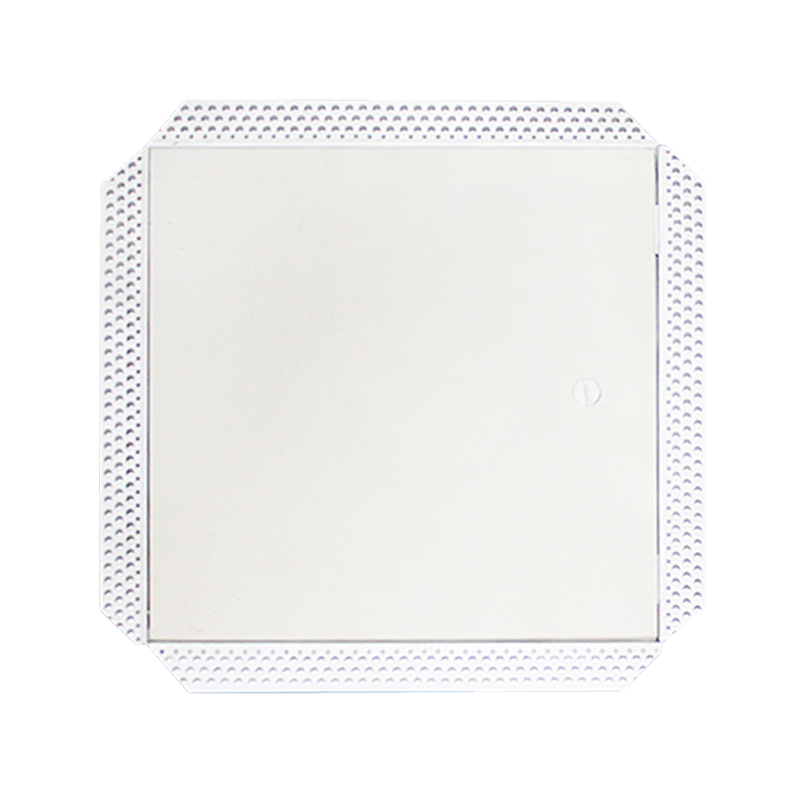
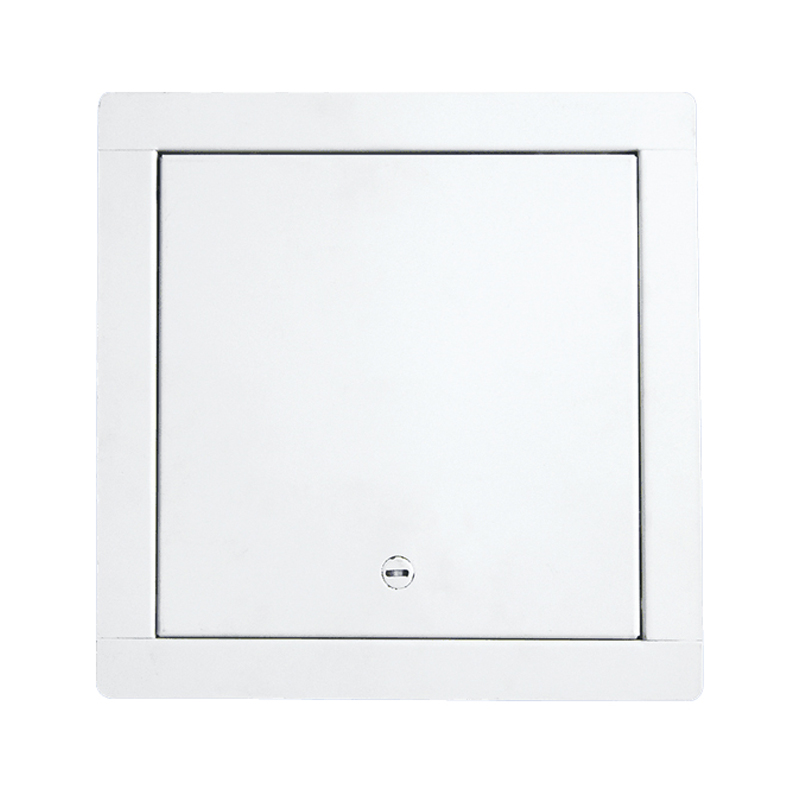
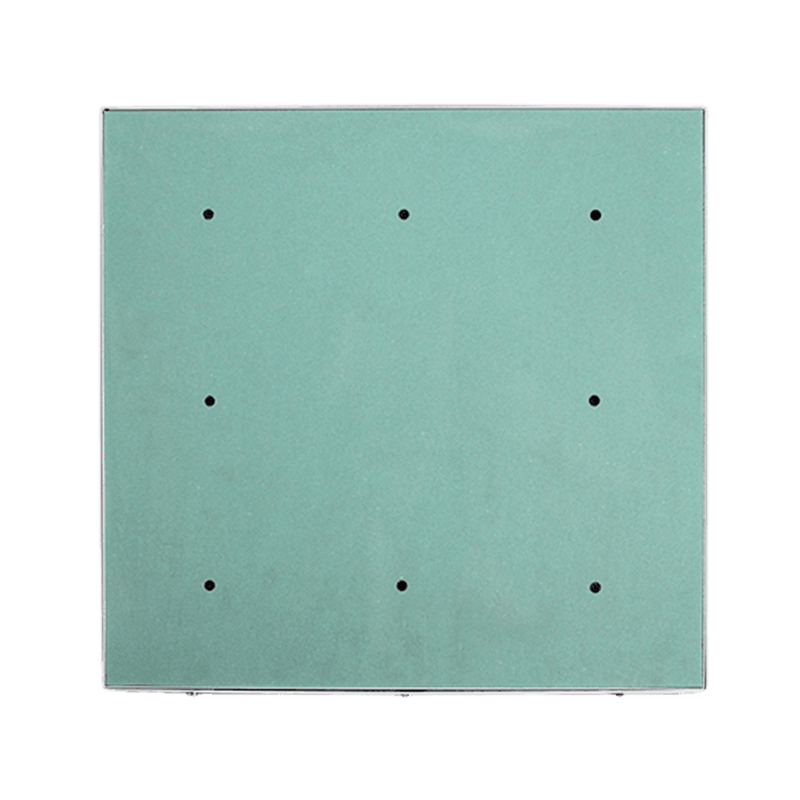
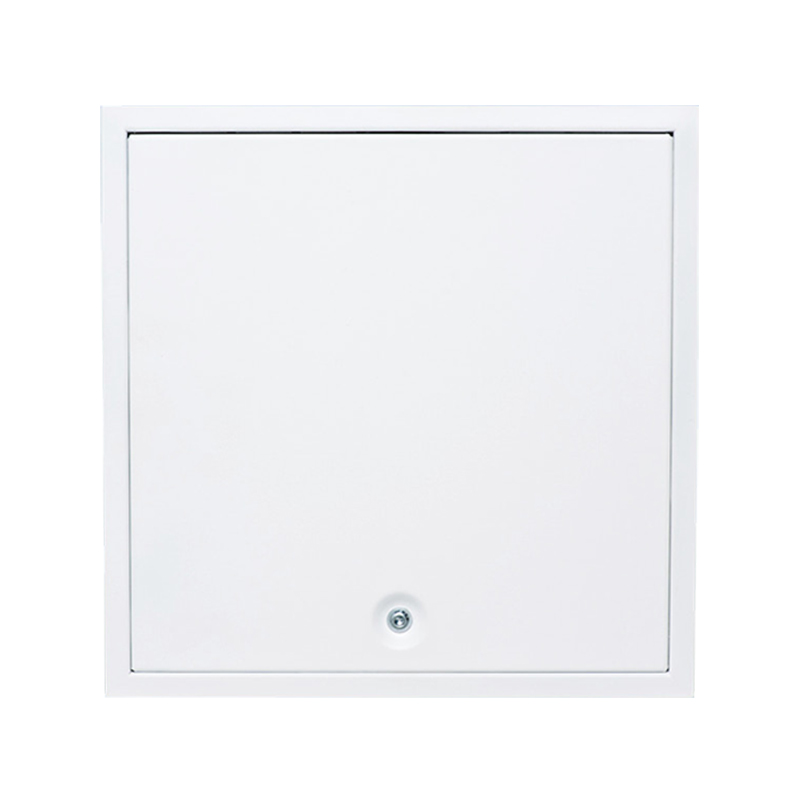
Selecting a high-quality steel access panel comes down to three core criteria: material durability, precise dimensional fit, and installation simplicity. For high-humidity or corrosive environments — food processing plants, coastal facilities, or commercial kitchens — 304 or 316 stainless steel access panels are the first choice, offering superior resistance to oxidation and chemical exposure. For standard industrial and commercial construction where moisture levels are moderate, a galvanised steel access panel delivers an optimal balance of long-term performance and cost efficiency. Matching the panel size — whether an 8x8, 12x12, or 24x24 stainless steel access panel — to the specific maintenance opening is equally critical to achieving a proper seal and a flush finish.
When infrastructure is exposed to persistent moisture, chlorides, or cleaning chemicals, a standard carbon steel panel will corrode within months. A stainless steel access panel resolves this with a passive chromium oxide layer that self-repairs when scratched, maintaining a continuous barrier against oxidation without any additional coating.
Two alloy grades dominate industrial procurement:
Panel body thickness is a structural decision, not merely a weight consideration. A 16-gauge stainless steel access panel (approximately 1.59 mm) is the standard for wall installations where mechanical rigidity under accidental impact is required. A 20-gauge (approximately 0.91 mm) variant is acceptable for ceiling panels where load is negligible and a lighter assembly simplifies single-person installation. Manufacturers such as Zhejiang Shunshi Intelligent Technology Co., Ltd utilise CNC-precision-pressed frames and continuous TIG-welded corners on their stainless steel access panel doors, a fabrication standard that eliminates micro-gaps at the perimeter — the primary pathway for moisture intrusion and air leakage that compromises fire ratings.
From an aesthetic standpoint, a brushed No. 4 finish on a stainless panel blends with modern architectural interiors in a way that painted panels cannot, and it conceals minor surface scratches accumulated over years of routine maintenance access.
A galvanised steel access panel undergoes hot-dip galvanising — submerging the formed steel body in a molten zinc bath at approximately 450 °C — which bonds a zinc-iron alloy layer metallurgically to the substrate. This produces a coating that, unlike spray-applied primers, cannot delaminate from mechanical handling during installation.
In ASTM B117 salt-spray testing, a standard hot-dip galvanised panel achieves 250–500 hours before red rust appears at cut edges, compared to 1,000+ hours for an electropolished 316 stainless panel. For dry-to-moderate humidity environments — commercial office builds, retail fit-outs, standard warehouse structures — this performance is more than adequate and the per-unit cost is typically 30–50% lower than an equivalent stainless panel of the same gauge and size.
Galvanised panels carry a meaningful advantage in fire-rated assemblies. The zinc coating is non-combustible and adds no fuel load to the wall cavity, enabling galvanised steel access panel doors to be integrated into 1-hour and 2-hour fire-rated drywall systems when installed with the appropriate intumescent perimeter gasket. This makes the galvanised variant the predominant specification in commercial construction where fire compliance documentation is a procurement requirement.
One practical consideration: cut edges and drilled fixing holes on galvanised panels expose raw steel. Field-applied cold galvanising compound or zinc-rich primer must be used at these points to prevent localised corrosion that can track under the coating — a step frequently omitted on-site and the primary cause of premature panel degradation in galvanised installations.
Dimensional specification is among the most consequential decisions in access panel procurement. Undersizing a panel forces destructive enlargement of the opening during maintenance; oversizing compromises the structural integrity of the surrounding substrate and creates an aesthetically unacceptable gap. The following size-to-application matrix reflects established site practice:
An 8x8 stainless steel access panel (203 × 203 mm) is the minimum practical size for single-hand tool access. Its primary applications include isolation valve inspection points on branch pipework, concealed cleanout plugs in drainage systems, and access to junction boxes where only a single conduit connection requires periodic inspection. The compact footprint makes it well-suited to tiled surfaces in bathrooms and commercial kitchens where a larger opening would require extensive tile replacement. At 20-gauge, an 8x8 panel weighs under 0.5 kg, enabling magnetic or spring-latch closure mechanisms without frame distortion.
The 12x12 stainless steel access panel (305 × 305 mm) is the most commonly specified size across commercial fit-outs. It provides sufficient clearance to remove and reinstall a standard DIN-rail sub-board, adjust a zone valve actuator, or access a concealed pipe coupling with two-handed wrench operation. This size is the default recommendation for behind-wall plumbing service panels, electrical sub-distribution access in corridor walls, and HVAC control damper inspection points. The 12x12 format also aligns conveniently with standard 600 mm stud spacing, requiring no intermediate blocking when centred on a single stud bay.
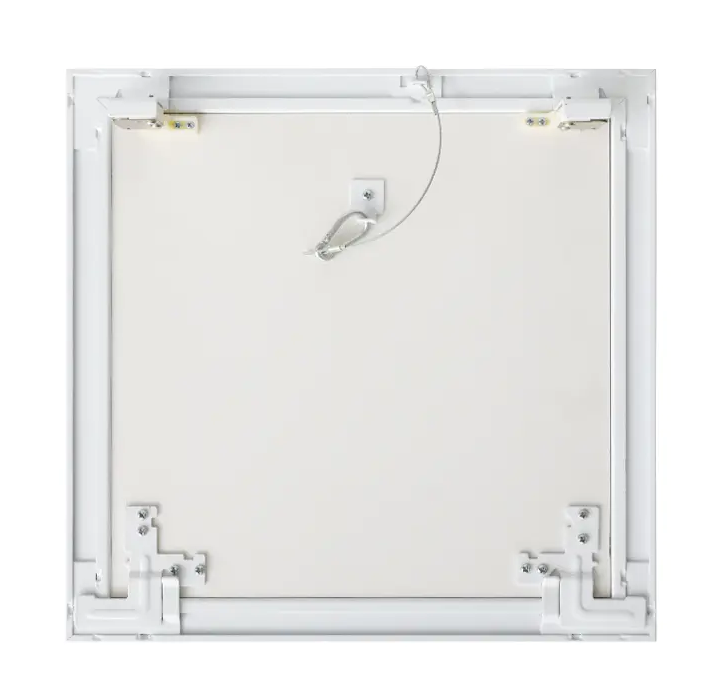
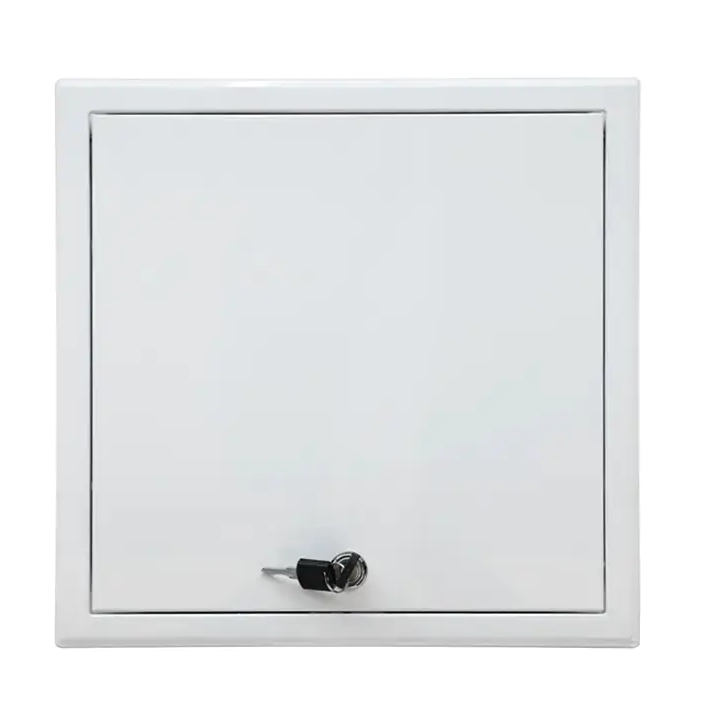
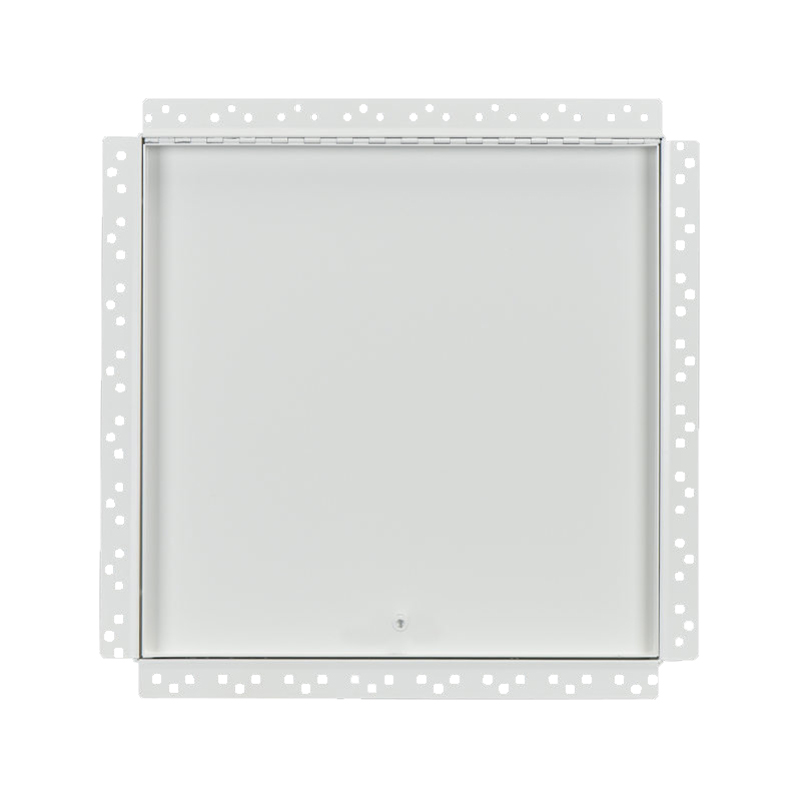
A 24x24 stainless steel access panel (610 × 610 mm) crosses the threshold into structural consideration. At this size, the panel opening spans two stud bays and necessitates a header and trimmer framing arrangement to maintain wall integrity — a design step that must be confirmed with the structural engineer of record. The 24x24 format is specified for access to fan-coil units concealed above suspended ceilings, large-bore isolation valves on primary distribution pipework, and inspection of concealed structural connections. For ceiling applications, the 24x24 panel should be specified in 16-gauge to resist panel deflection under its own weight across the full 610 mm span. Zhejiang Shunshi manufactures this format with a piano-hinge continuous-weld construction and a recessed key-lock mechanism, ensuring that a panel of this mass remains securely closed between maintenance intervals while still allowing one-person operation without tools beyond the access key.
The following table consolidates the critical performance parameters relevant to B2B specification decisions across the two primary material categories for steel access panel doors.
| Salt-Spray Resistance (ASTM B117) | 500–800 hrs | 1,000+ hrs | 250–500 hrs |
| Corrosion Mechanism | Self-healing passive layer | Self-healing + Mo pitting resistance | Sacrificial zinc coating |
| Typical Gauge Range | 16 – 20 gauge | 16 – 20 gauge | 16 – 20 gauge |
| Fire-Rating Compatibility | Yes (with gasket) | Yes (with gasket) | Yes (with gasket) |
| Recommended Environments | Wet areas, food service, HVAC | Marine, pharma, coastal, pools | Dry/moderate commercial, offices, warehouses |
| Common Standard Sizes | 8x8, 12x12, 24x24 in | 8x8, 12x12, 24x24 in | 12x12, 14x14, 24x24 in |
| Relative Material Cost | Medium–High | High | Low–Medium |
| Surface Finish Options | 2B, No. 4 brushed, mirror | 2B, No. 4 brushed, electropolish | Spangle zinc, powder coat over zinc |
Correct installation of steel access panel doors determines whether a panel achieves its specified performance — particularly for air, fire, and acoustic ratings. The following are the critical execution points that separate a compliant installation from one that fails at inspection.
The rough opening must be sized to the manufacturer's published frame dimension, not the nominal panel size. On stainless panels from Zhejiang Shunshi, the frame body typically adds 12–15 mm per side beyond the door leaf — a 12x12 panel therefore requires a rough opening of approximately 330 × 330 mm. Setting the opening 5–10 mm oversized and shimming the frame level is best practice; undersizing the opening and force-fitting the frame distorts the hinge geometry and causes the door to bind or fail to latch under thermal expansion.
In masonry substrates, a steel angle or formed channel lintel must be provided at the top of the opening for openings above 300 mm width. Drywall installations require blocking between studs to provide a minimum 38 mm fastening surface for all four sides of the frame flange.
The perimeter gasket performs three functions simultaneously: acoustic attenuation, draught sealing, and — where fire-rated systems are specified — intumescent sealing against smoke and hot gases. A continuous compression gasket must contact the wall surface uniformly under door-closed load. Zhejiang Shunshi's precision-pressed stainless steel access panel frames are manufactured with frame flatness tolerances within ±0.3 mm across the full perimeter, ensuring that the gasket compression is consistent and predictable. Field-bent or low-tolerance frames produce uneven gasket contact, creating localised leakage paths that are invisible to a standard pressure test but permit conditioned air or smoke to bypass the closure.
Stainless steel piano hinges require no lubrication under normal use, as the passive surface layer prevents metal-to-metal seize. On galvanised panels, exposed zinc hinge knuckles in high-humidity spaces should be inspected annually and lubricated with a silicone-based compound — petroleum-based lubricants accelerate zinc oxidation. Spring latches on stainless panels should be tested for full positive engagement at each maintenance visit; the spring rate degrades after approximately 10,000 actuations and should be replaced before it reaches a point where the panel is not reliably held closed, which is both a security and a fire-rating concern.
For large-format 24x24 stainless steel access panel doors with key-lock mechanisms, the lock cylinder should be lubricated with a graphite-based dry lubricant annually. Wet lubricants attract dust in the lock body and ultimately seize the pin stack — the inverse of the intended maintenance benefit.
Before handing over a completed installation, three checks establish a compliant baseline:
Documenting the installation date, panel model, gauge, and material grade in the building's asset management system creates the baseline record required for planned maintenance scheduling and enables like-for-like replacement procurement without the need to measure existing panels during a future refurbishment.

Contact Us
SHUNSHI provides a range of technical support services to ensure that customers are able to properly select, install and maintain these products.
Products
Access Panels GuideContact
Tel: 86-15988108762
86-572-8298792
Fax: 86-572-8298792
E-mail: [email protected]
No.281 Mingzhu Main Road, Leidian Town, Deqing, Huzhou, Zhejiang, China, 313219

 English
 Español
 عربى
عربى