English
When you specify a duct access door, the decision is rarely about aesthetics. It is about how tightly the panel seals, how well the frame merges with the ductwork, and whether a technician can reach the damper or filter section without forcing the panel open. In our work with HVAC contractors and wholesale distributors, the most common problems with duct access doors are small mismatches: air leakage around the gasket, a protruding frame edge, or a hinged door that cannot open because the duct is too close to the wall. That practical view shapes the following selection criteria, drawn from our experience manufacturing access panels in Zhejiang since 2005.
A duct access door is the service interface between plant-room staff and the ductwork that distributes conditioned air. It must give a clean, safe opening for inspection and maintenance, but it cannot be the weak point in the duct's pressure envelope. A door that leaks wastes energy, creates condensation, and makes every routine filter change a struggle.
HVAC specifiers mostly narrow the choice to galvanized steel or aluminum. Both can produce a solid duct access door, but they suit different environments. Galvanized steel offers a high strength-to-cost ratio and a familiar, substantial feel. It is the default in plant rooms, supply ducts, and other enclosed spaces where corrosion risk is moderate. Aluminum is lighter and naturally corrosion-resistant, which makes it more suited to coastal, industrial, or high-humidity locations. The trade-off is that aluminum needs a slightly thicker profile to be as rigid as steel.
| Property | Galvanized Steel | Aluminum |
|---|---|---|
| Corrosion resistance | Good in dry HVAC environments | Excellent in humid or coastal settings |
| Weight | Heavier, more stable at large sizes | Lighter, easier to handle and install |
| Strength-to-cost | High | Moderate |
| Typical use | Plant rooms, supply and return ducts | Exposed or semi-exposed ductwork |
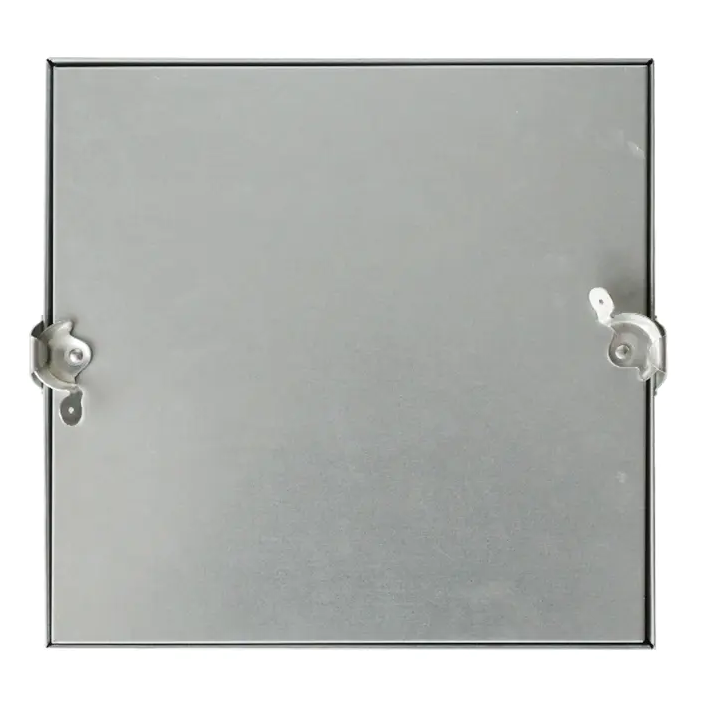
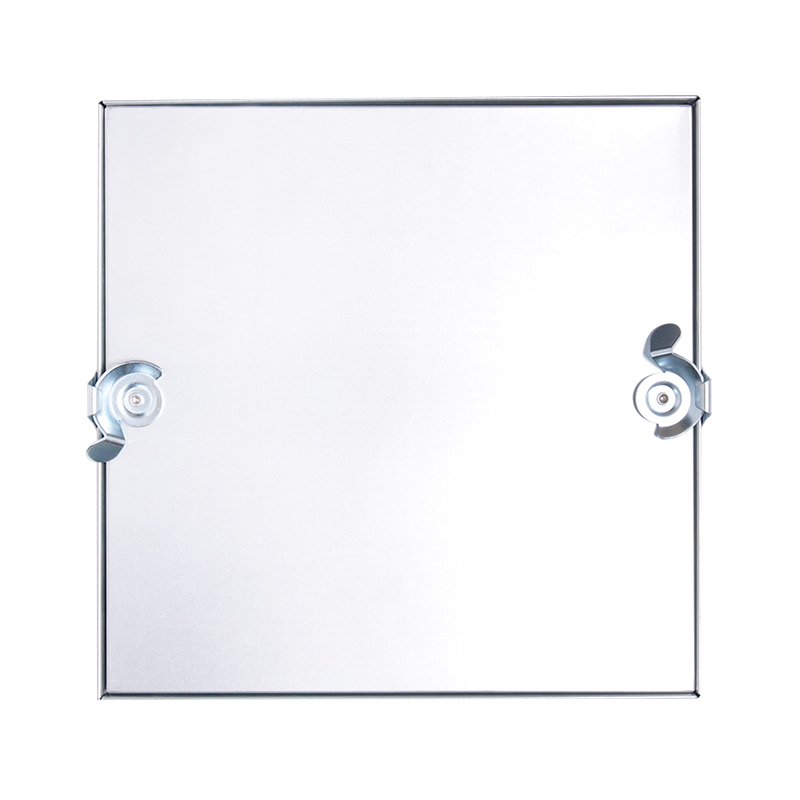
At our factory in Deqing, we manufacture a hinged galvanized steel duct access door that many contractors treat as the baseline for plant-room installs. It uses a continuous gasket and a cam latch, and it is available in a range of standard cut-out sizes.
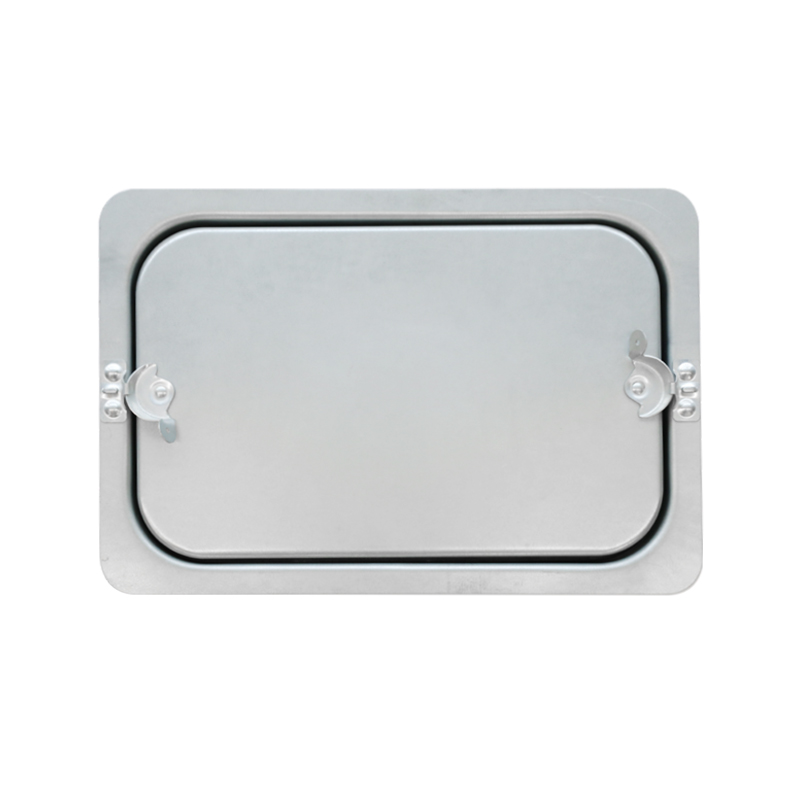 Hinged Galvanized Steel Rectangular Duct Access Door with Cam LatchThis door offers quick access to duct components, sizes from 6x6 to 24x24 inches, and a double-wall construction with cam latches. Its continuous gasket ensures a tight seal, ideal for plant-room installs.View Product →
Panel dimensions are the first item to lock down. In most projects, the door is ordered for the cut-out in the duct wall, not for the outer frame. A metal duct access door with a 200 mm x 300 mm opening may have an outer frame around 230 mm x 330 mm, with the extra distance used for the flange, the gasket channel, and the fixing lip. When you compare drawings from multiple suppliers, ask whether the quoted size refers to the clearance opening or the overall frame. A single misunderstanding on that point can cost you expensive rework on site. Our access panel sizes and dimensions guide walks through the distinction in detail.
Sealing is where leakage problems start. A continuous gasket around the inside perimeter of the frame is the minimum requirement. The gasket material should stay flexible over the duct temperature range and should not degrade under HVAC air conditions. We use an EVA-based or PVC-based gasket on standard doors, and a silicone gasket on high-temperature versions. A purely adhesive-backed foam strip may survive a few inspections, but it deforms and peels off within a year. A mechanically fixed gasket with a chamfered profile holds its seal much longer.
Tolerances are the second detail that separates a reliable supplier from a generic one. In practice, we aim for a frame squareness deviation of about 1 mm over 500 mm, and a door leaf flatness deviation of no more than 2 mm. The leaf must sit flush in its opening without warping. When you sample panels from a new supplier, these two checks take five minutes with a steel tape and a straightedge.
Not every duct access door carries a fire rating, but if the duct passes through a fire compartment, a fire-rated panel becomes mandatory. The rated door must match the fire resistance of the surrounding duct or wall. The weak point in a real installation is usually the joint between the frame and the duct. Certification covers the panel, but careless cutting can let smoke and flame bypass it. We publish installation guidelines that address faying surfaces and fixing intervals, and for plant-room applications you can read more in our HVAC access panel specification guide.
A duct access door may be fixed directly to the duct wall, to a fan discharge section, or through a ceiling layer into a confined duct space. Each context changes the mounting configuration. In a plant room, the door is usually screw-fixed directly to the duct. The gasket must run continuously, and screws must be placed on all four sides to prevent pinch points. When the door is installed through a suspended ceiling, the inner leaf should align with the ceiling access opening, and the frame should be trimmed so it does not protrude beyond the ceiling line.
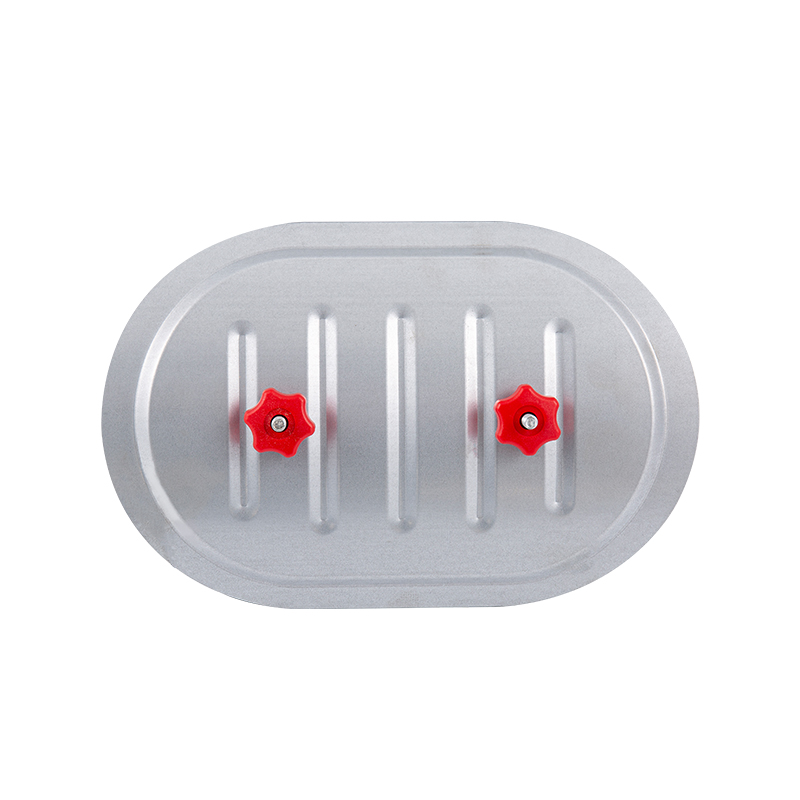
Where a duct is curved or the opening space is restricted, a round or oval panel is often the better solution. Our oval galvanized steel duct access door is designed for such sections, with a compact flange that follows the duct surface and a recessed lock that keeps the profile minimal.
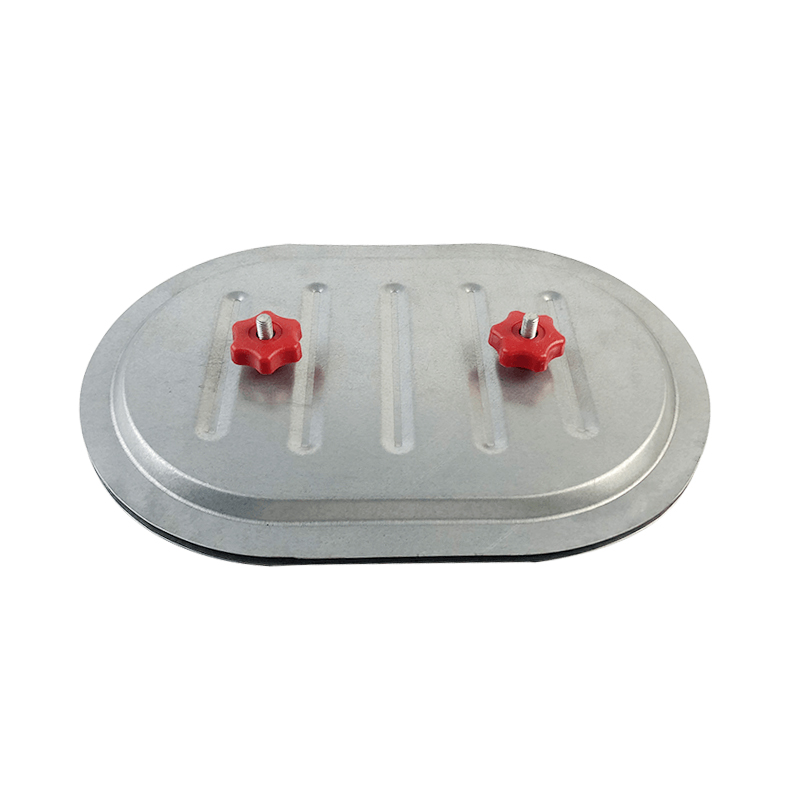 Oval Galvanized Steel Duct Access Door for Curved DuctsDesigned for curved duct sections, this compact door features a flange that follows the duct surface and a recessed lock. It includes a cellular sponge gasket for a tight seal and is rust-proof.View Product →
If you are buying from a manufacturer directly, quality control is the most useful lever you have. Before committing to a production run, ask the factory how they manage the following points:
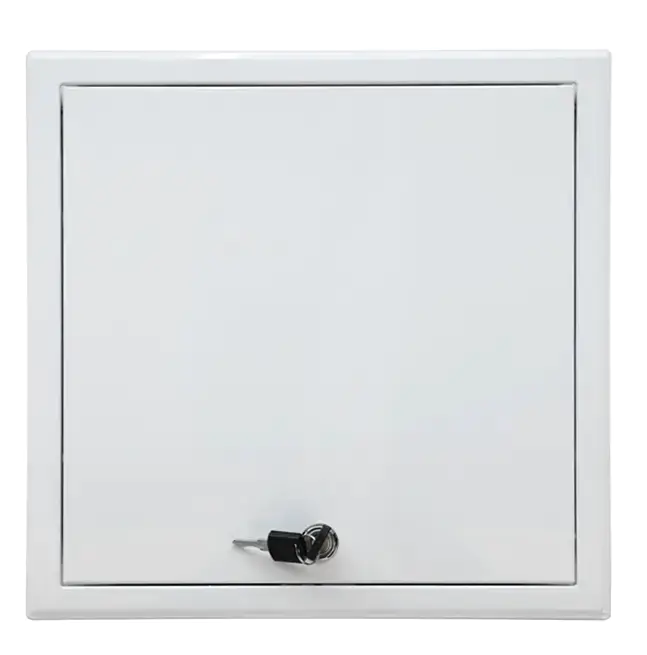
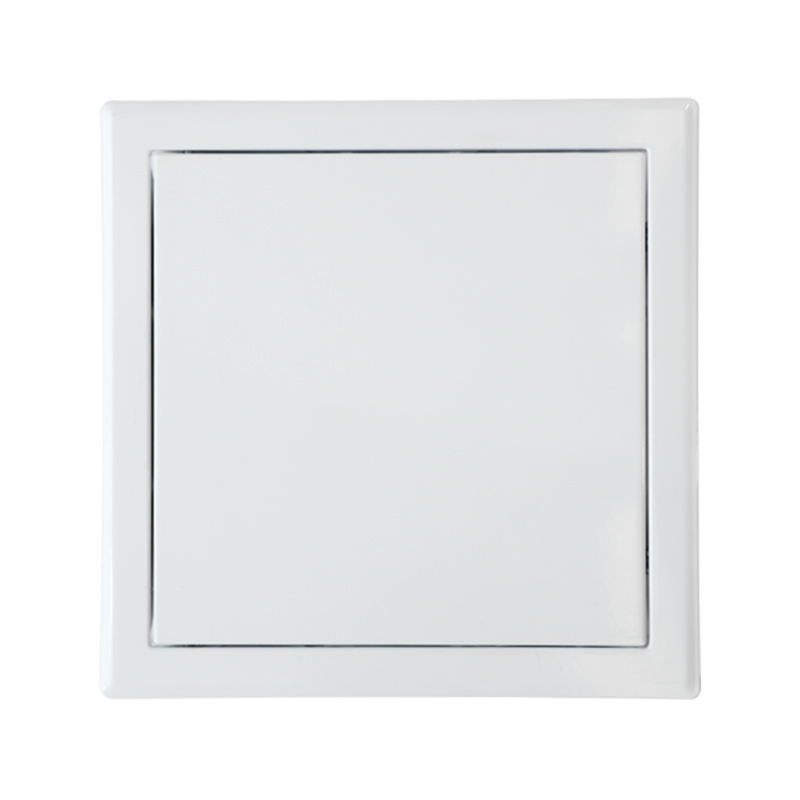
Our facility follows ISO 9001 requirements and we have exported to 91 countries, including project applications such as the Burj Al Arab in Dubai. We are comfortable with third-party inspection at the factory, and we think a documented inspection stage is the most reliable way for a wholesale buyer to confirm panel dimensions and seal quality before shipment. When a buyer asks for a standard hinged door in bulk, the galvanized steel duct access door with a press-lock closure is a common starting point because it uses a flat flange and a press-lock closure that can be installed quickly.
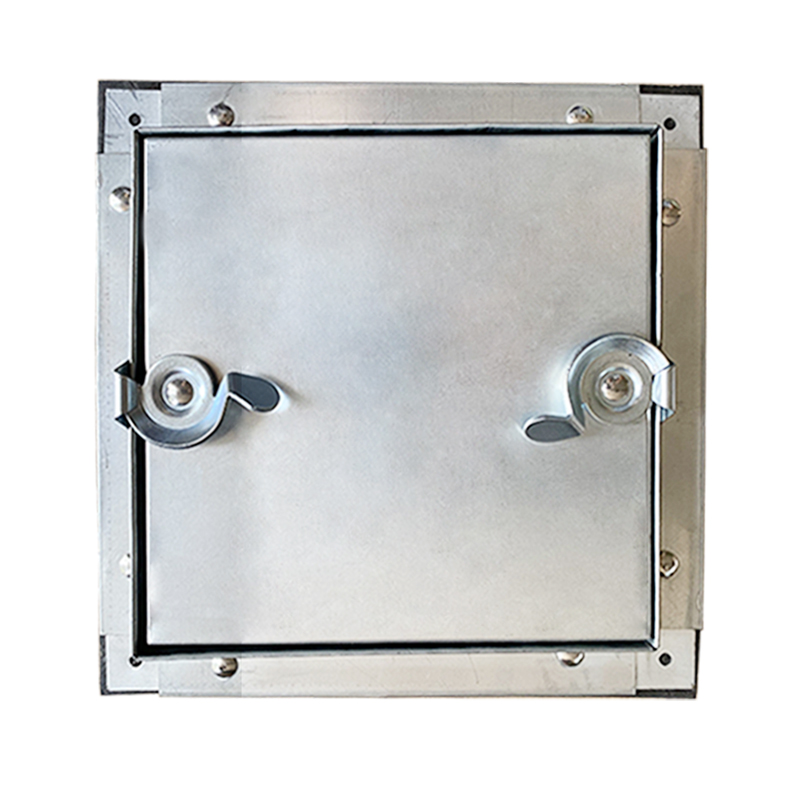 Galvanized Steel Duct Access Door with Press-Lock for Bulk OrdersThis standard door with press-lock closure and flat flange is suitable for quick installation. Custom sizes available, and it is manufactured under ISO 9001 with third-party inspection options, ensuring reliability for wholesale buyers.View Product →
Ultimately, the success of a duct access door depends on where it goes and who uses it. If the size is correct, the material matches the environment, and the gasket is mechanically retained, the door will do its job for years. If any of those elements is wrong, the panel becomes a maintenance problem instead of a maintenance solution. When you compare suppliers, make the comparison on sealing, tolerance, and material behavior rather than surface appearance alone.

Contact Us
SHUNSHI provides a range of technical support services to ensure that customers are able to properly select, install and maintain these products.
Products
Access Panels GuideContact
Tel: 86-15988108762
86-572-8298792
Fax: 86-572-8298792
E-mail: [email protected]
No.281 Mingzhu Main Road, Leidian Town, Deqing, Huzhou, Zhejiang, China, 313219

 English
 Español
 عربى
عربى