English
A steel access panel for bathroom installations is a viable specification — but only when the correct surface protection and hardware are confirmed before ordering. Bare galvanized steel will corrode in a persistently humid bathroom environment within 12–18 months, producing rust bleed through the paint finish and hinge stiffening that makes the panel difficult to open. The solution is not to avoid steel; it is to specify steel with the right powder-coat system, moisture-resistant inlay, and stainless steel hardware from the outset.
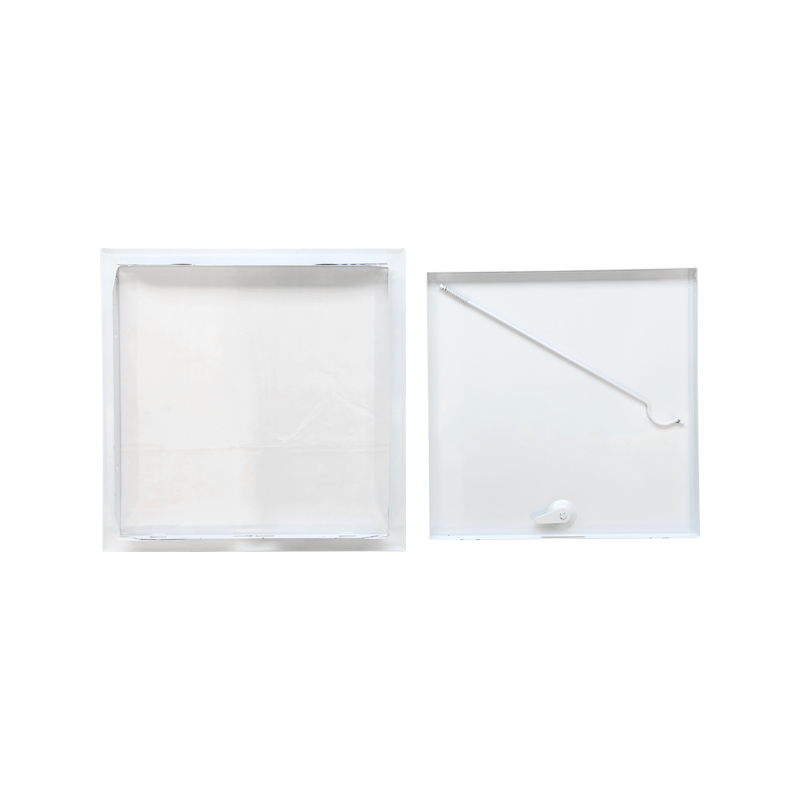
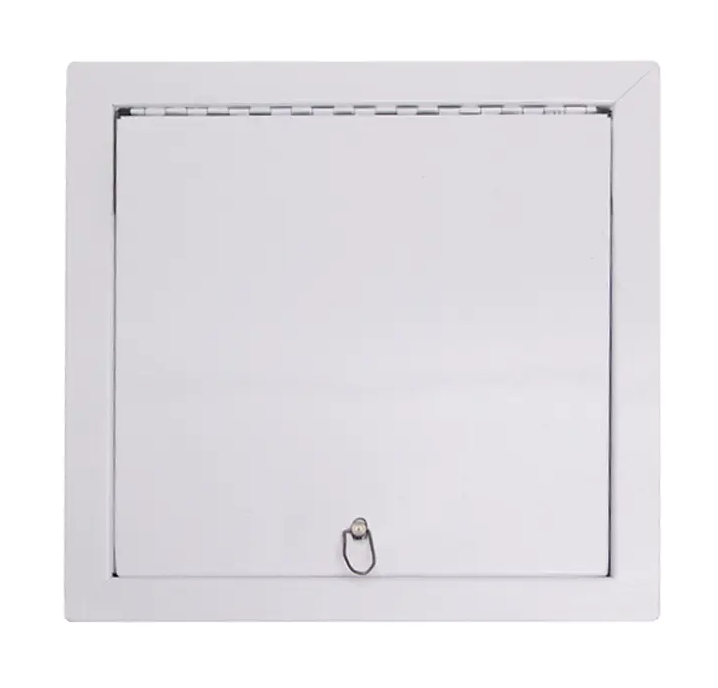
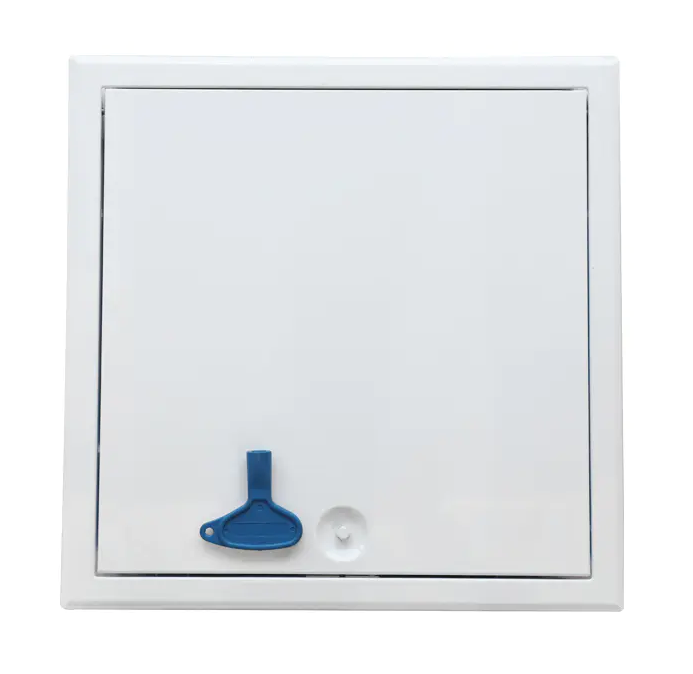
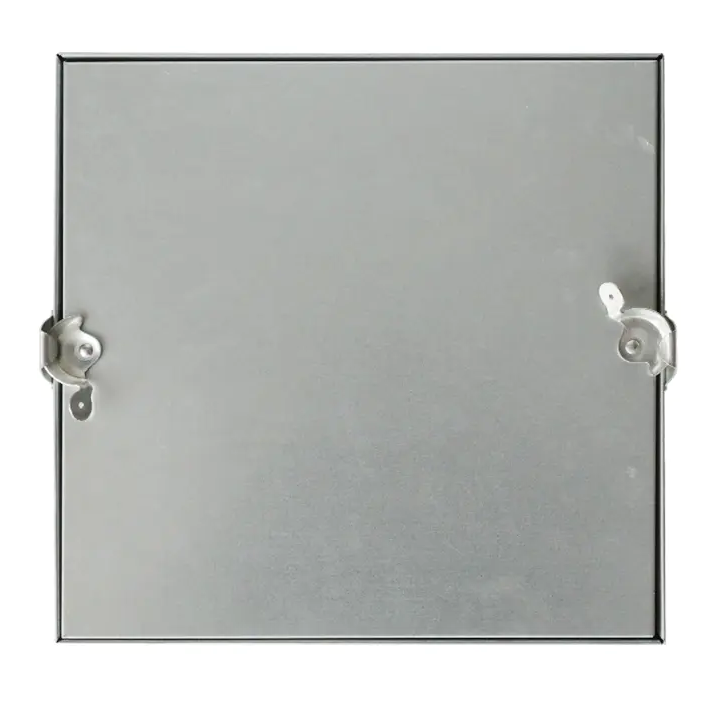
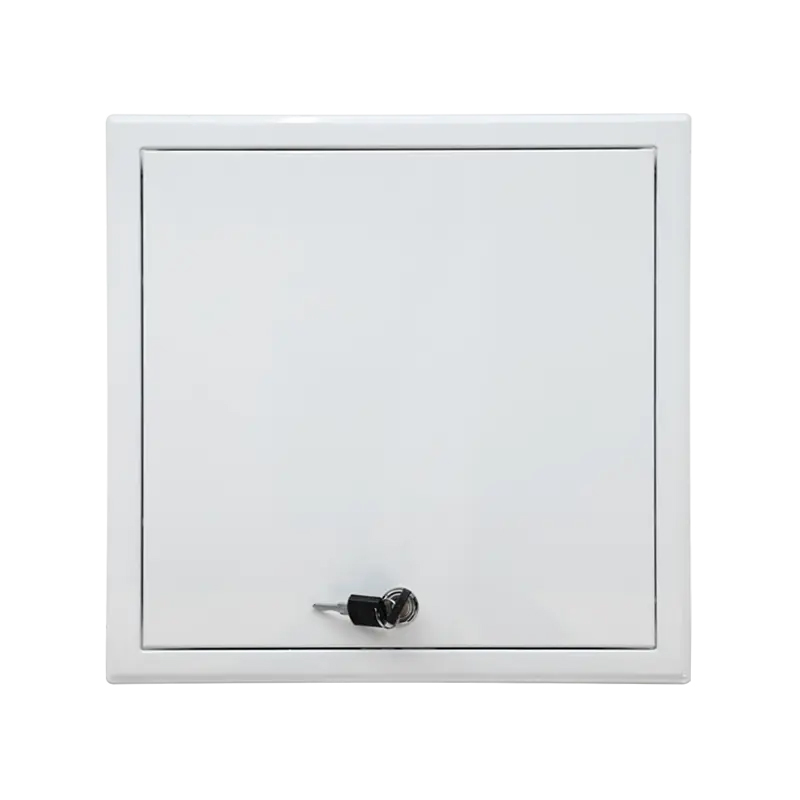
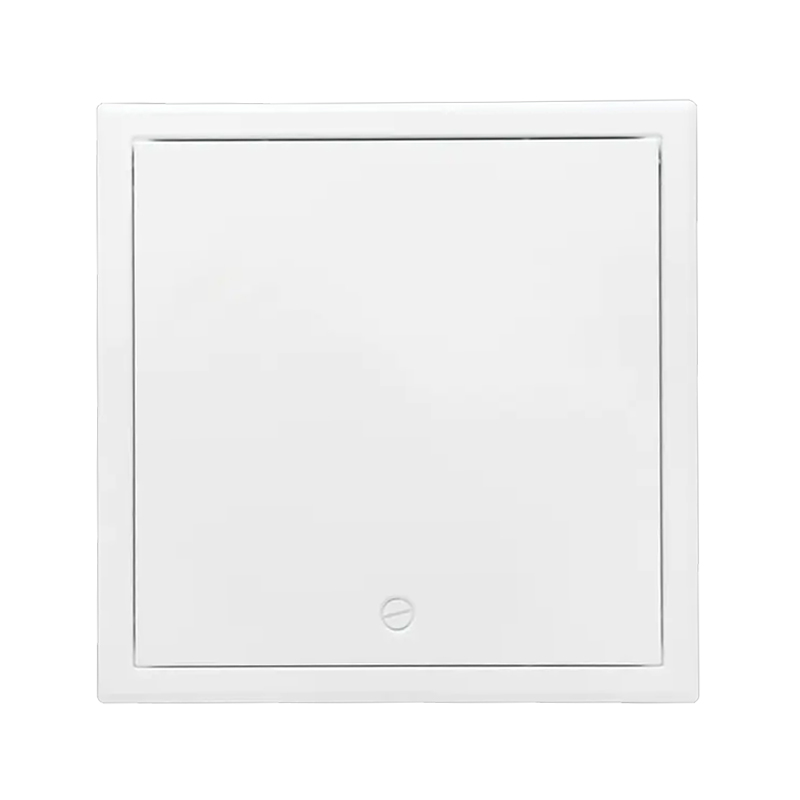
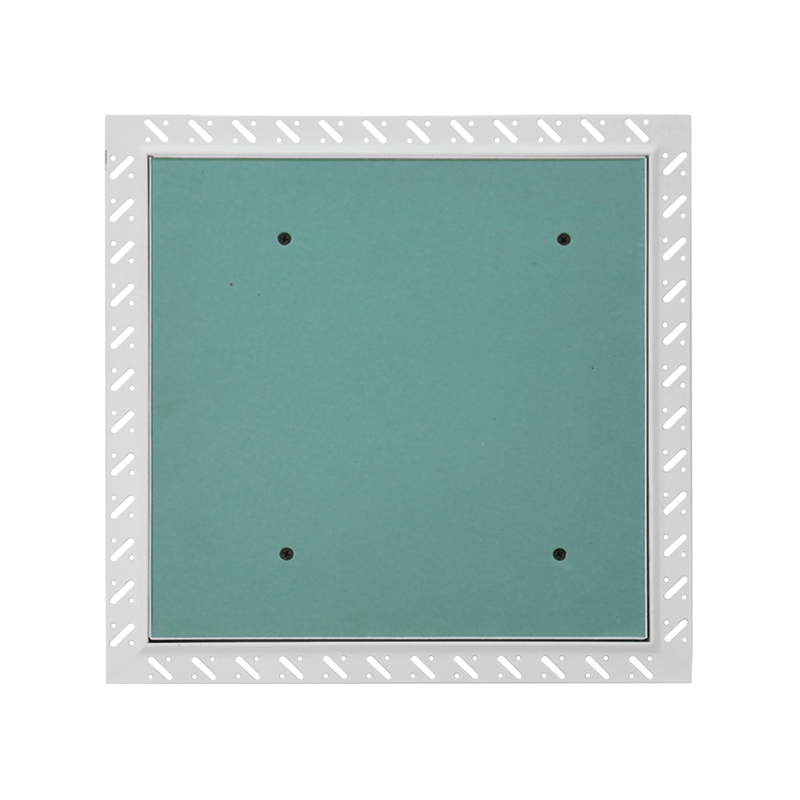
Steel access panel — frame and door leaf shown separately, white powder-coat finish suitable for painted bathroom walls
Aluminum is the more common specification for bathroom and wet-area access panels because it is inherently corrosion-resistant without additional coating. But steel is the correct choice in two bathroom scenarios where aluminum cannot perform as well:
For standard residential or commercial bathroom walls without fire rating or security requirements, an aluminum panel with moisture-resistant inlay is usually the more practical choice. See the aluminum access panel selection guide for a full comparison by application scenario.
Four specification points determine whether a steel bathroom access panel performs reliably over years of use in a humid environment. All four must be confirmed at the order stage — not as site substitutions after delivery.
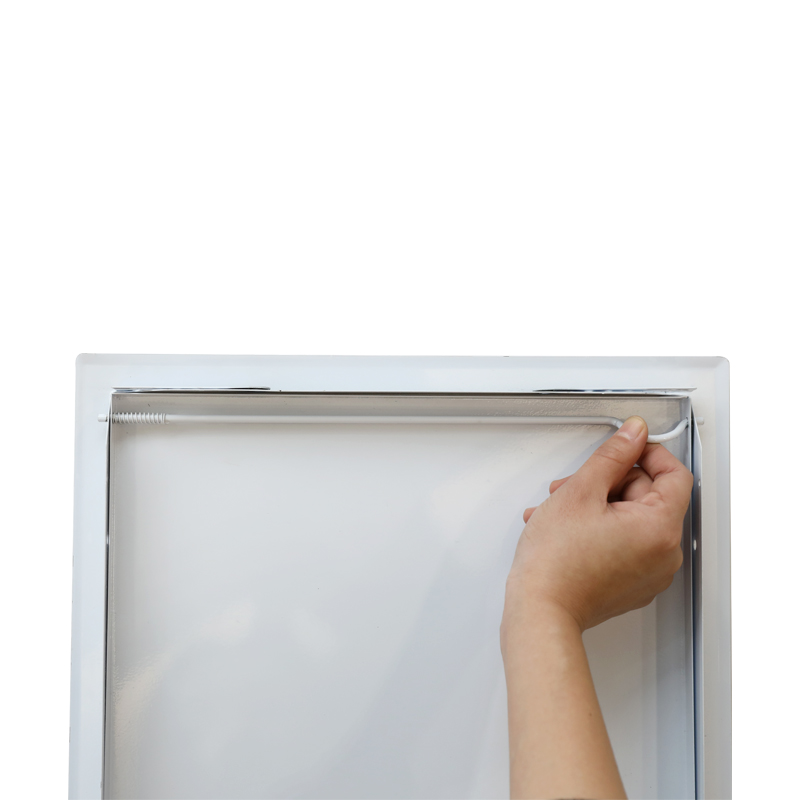
Perimeter seal detail — prevents moisture ingress at the frame-to-door junction
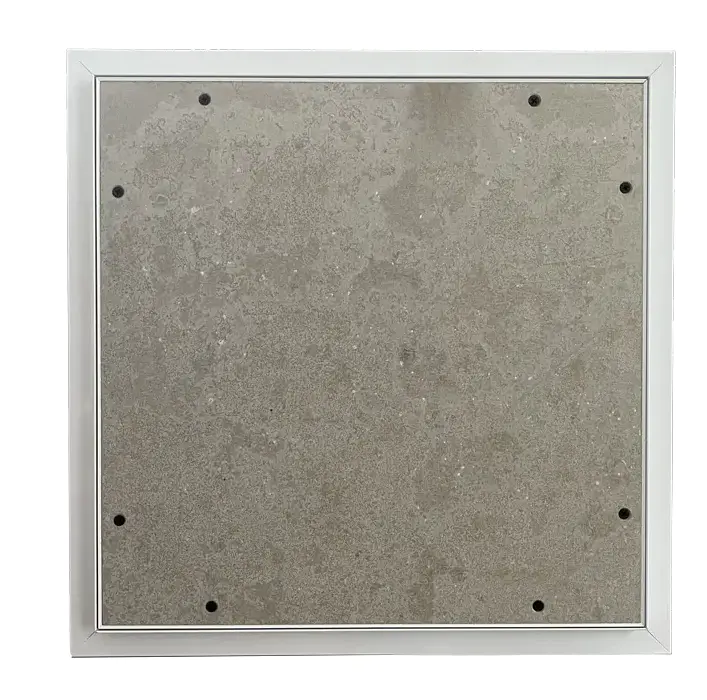
Standard gypsum board inlays will swell, crack, and delaminate from the steel door face in bathroom humidity within months of installation. The inlay must be either moisture-resistant gypsum board (for painted bathroom walls) or PVC board (where no painting is required and the factory-white finish is acceptable). The inlay thickness must also match the surrounding wall board exactly — a 12 mm inlay in a 15 mm wall will sit visibly recessed after installation.
Standard galvanized steel provides a corrosion-resistant base layer, but galvanization alone is not sufficient for a bathroom environment where condensation accumulates on the panel face and frame edges. A continuous powder-coat finish over the galvanized substrate — confirmed to cover all welded joints, frame corners, and cut edges without gaps — extends the panel's service life significantly. Any exposed bare steel at frame joints or screw holes will become the first point of corrosion. Confirm the powder-coat specification covers 100% of exposed surfaces including internal frame edges.
Standard zinc-plated hinges and latch components will corrode in bathroom environments, producing rust streaking on the panel face and hinge binding that prevents smooth operation within 12–18 months. Confirm that all hardware — hinges, latch body, and any latch face plate — is specified in stainless steel or marine-grade aluminum. This applies to the screws used for frame installation as well; zinc-plated fasteners corroding at the frame-to-wall interface will stain the surrounding wall finish.
For hotel and hospital bathrooms where the panel is accessed infrequently by maintenance staff only, a cam lock with key provides security while maintaining a flush, hardware-free face appearance. For commercial bathrooms in public facilities where facilities teams need frequent access, a screwdriver-slot latch is more practical — it does not require key management across multiple locations. A push-to-open snap latch is appropriate only in non-public bathroom areas where security is not a requirement. For the full breakdown of latch types and when each applies, see the steel access panel key lock guide.
A standard steel access panel with zinc-plated hardware and a standard gypsum inlay is not suitable for bathroom installation. The inlay will delaminate and the hardware will corrode in persistent humidity. A steel panel specified for bathroom use must have a continuous powder-coat finish over galvanized steel, a moisture-resistant or PVC inlay, and stainless steel hardware throughout. With these specifications confirmed, steel is a viable and durable bathroom access panel material.
300 × 300 mm is the most common size for bathroom walls providing access to a single shut-off valve or junction box. Where the panel must provide access to a manifold or multiple valves, 400 × 400 mm is the appropriate step up. The panel width must fit within the stud spacing of the bathroom wall — confirm stud centres before finalising the size, particularly in retrofit installations where framing is not visible.

Contact Us
SHUNSHI provides a range of technical support services to ensure that customers are able to properly select, install and maintain these products.
Products
Access Panels GuideContact
Tel: 86-15988108762
86-572-8298792
Fax: 86-572-8298792
E-mail: [email protected]
No.281 Mingzhu Main Road, Leidian Town, Deqing, Huzhou, Zhejiang, China, 313219

 English
 Español
 عربى
عربى