English

When a wall, ceiling, or duct system needs a maintenance opening that will be opened and closed for years, steel access panels are usually the most reliable specification. They combine strength, fire resistance, dimensional stability, and a cost profile that fits commercial projects. If the opening will be used often, sits inside a fire-rated assembly, or shares space with plant equipment, steel is the material that performs.
The reasoning is simple: steel frames resist warping, keep the door aligned, and handle repeated open-and-close cycles without loosening at the hinges. Steel panels also offer the widest range of fire-rated configurations, which is why engineers specify them for corridors, stairwells, hospitals, hotels, and HVAC rooms. Aluminum and plastic have their own roles, but steel remains the workhorse of concealed access.
A steel access panel is not just a steel door. It is a frame-and-door assembly engineered to be recessed into a wall or ceiling and finished flush with the surrounding surface. The frame is typically formed from cold-rolled steel or galvanized steel, with a powder-coated or zinc-plated surface for corrosion resistance in normal indoor environments.
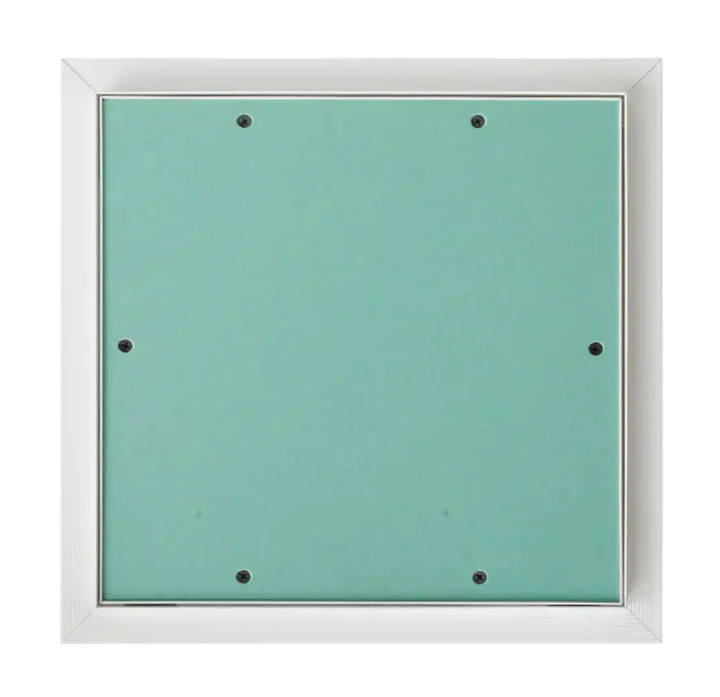
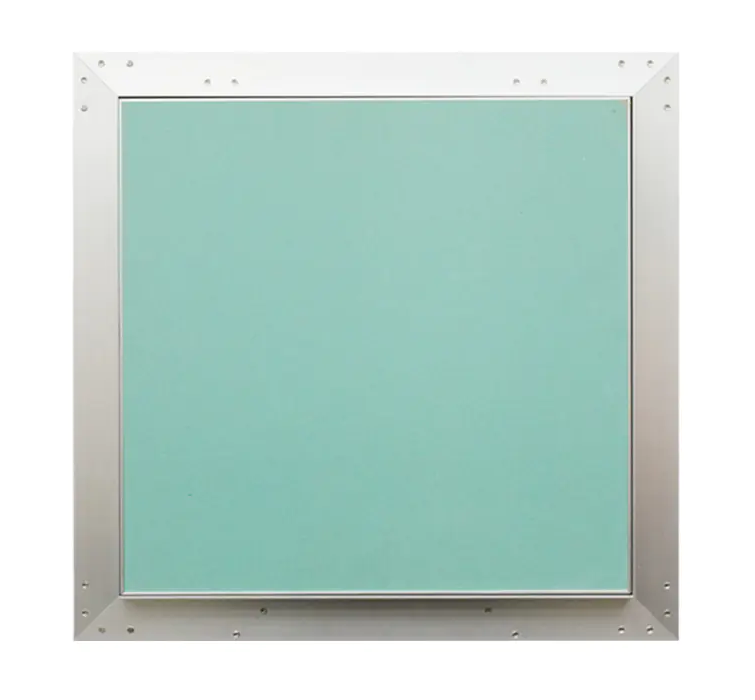
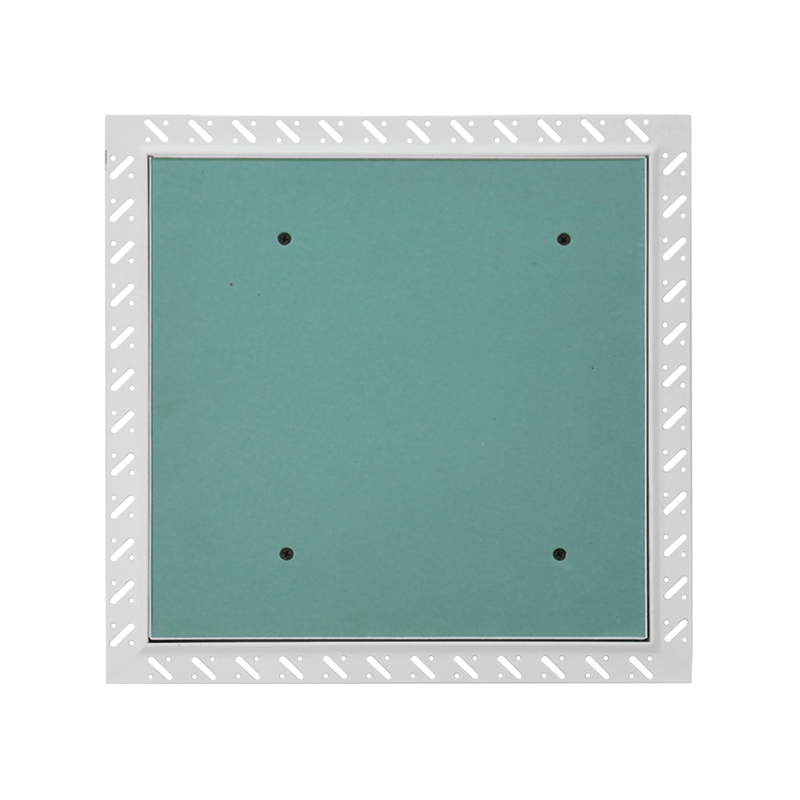
The door can be a steel skin, a gypsum board face, or a composite construction depending on the finish you need. A gypsum-faced door lets the plasterer or tiler work over the panel so the opening almost disappears. For equipment rooms and plant rooms, a plain steel door is more practical. Buyers can choose from a full steel access panel range that covers both configurations.
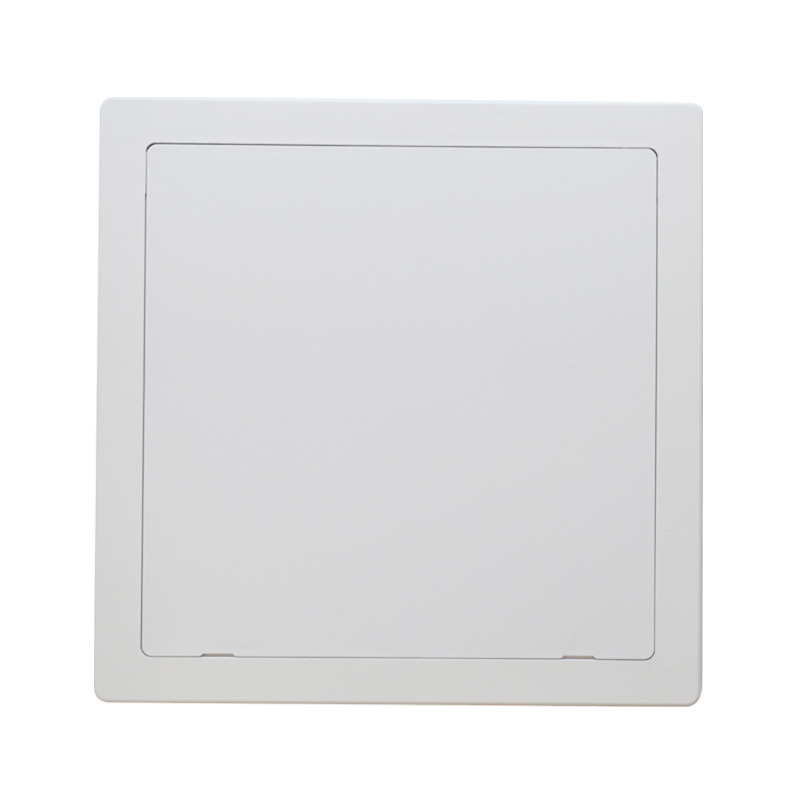
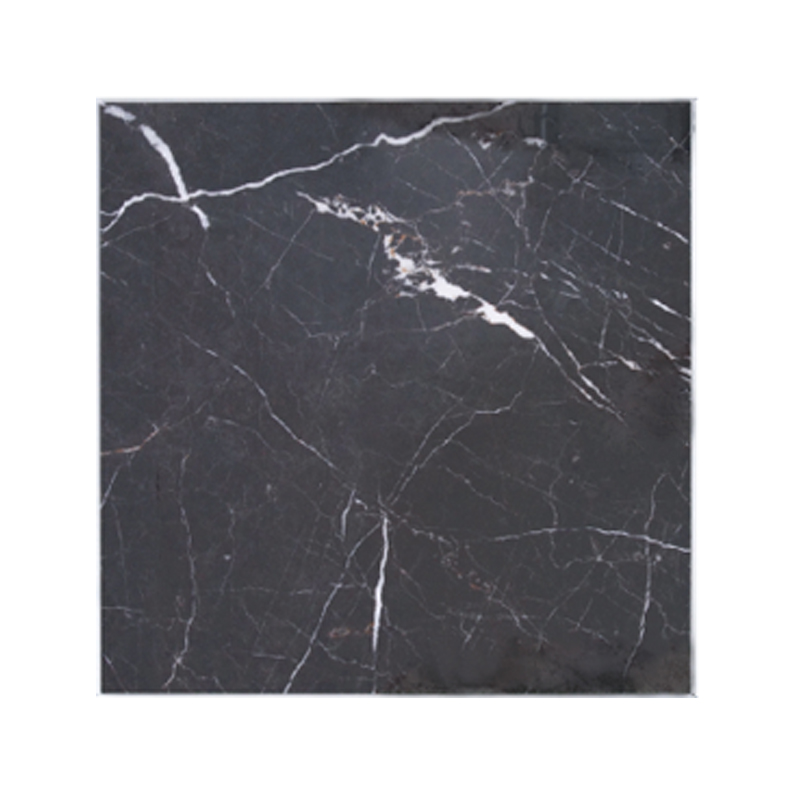 Wholesale Steel Access Panels Manufacturers, FactoryAs a China Steel Access Panels Manufacturers and OEM Steel Access Panels factory, Zhejiang Shunshi Intelligent Technology Co., Ltd supply...View Product →
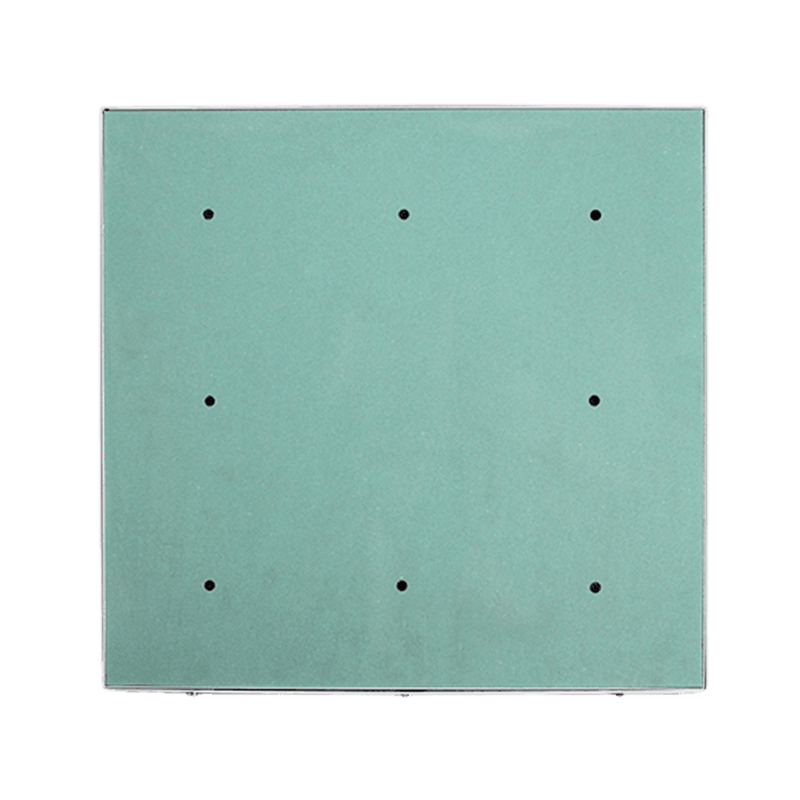
Gypsum-faced steel panels are the standard choice for drywall and plaster partitions. The installer applies joint compound and joint tape over the face, producing a surface that can be painted or tiled exactly like the surrounding wall. Cement board faces suit tile applications in wet areas, while plain steel faces are made for exposed mechanical spaces.
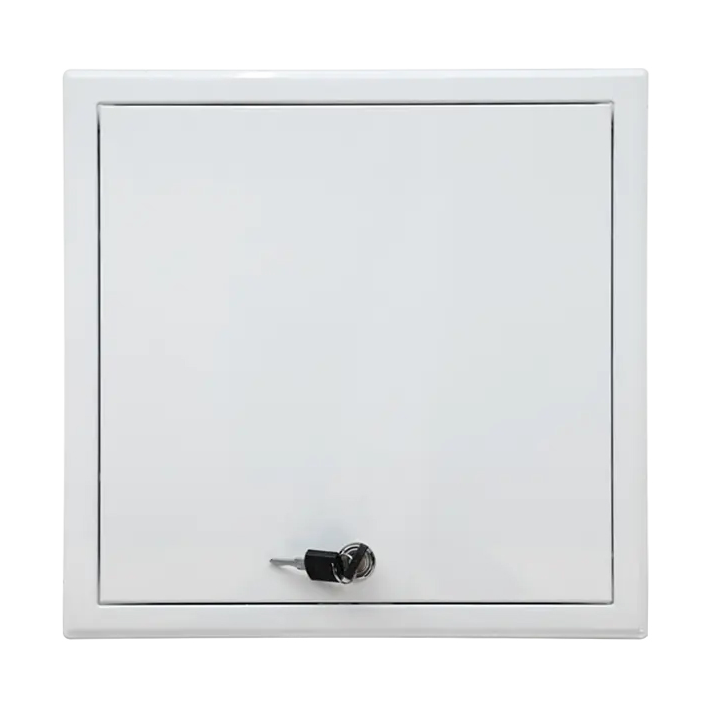
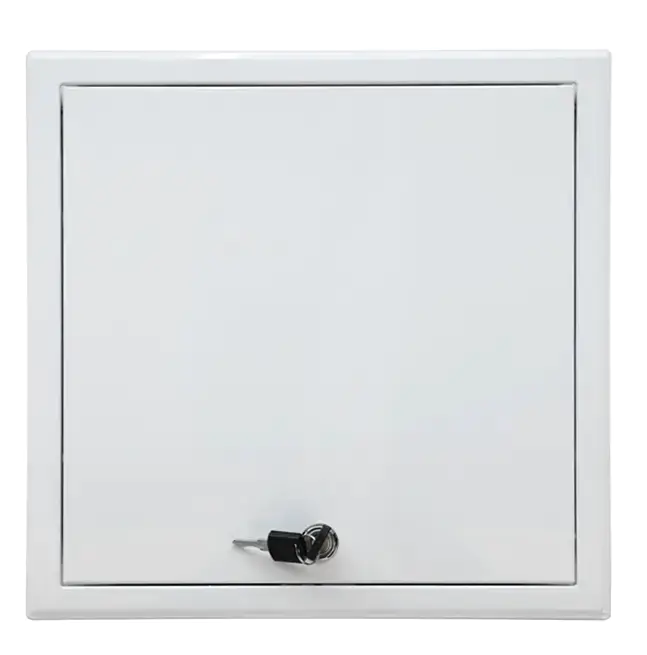
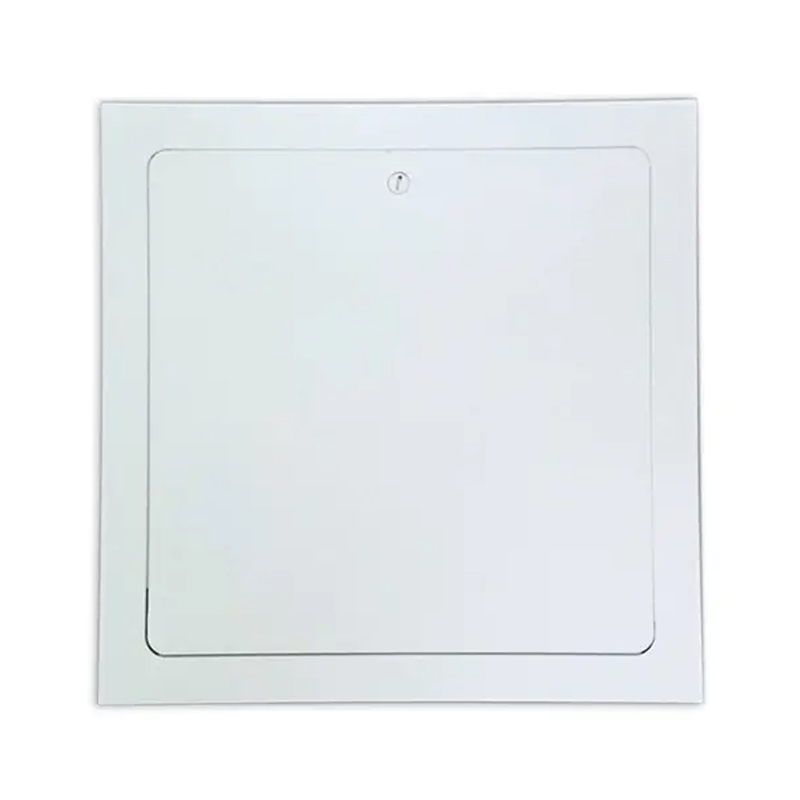
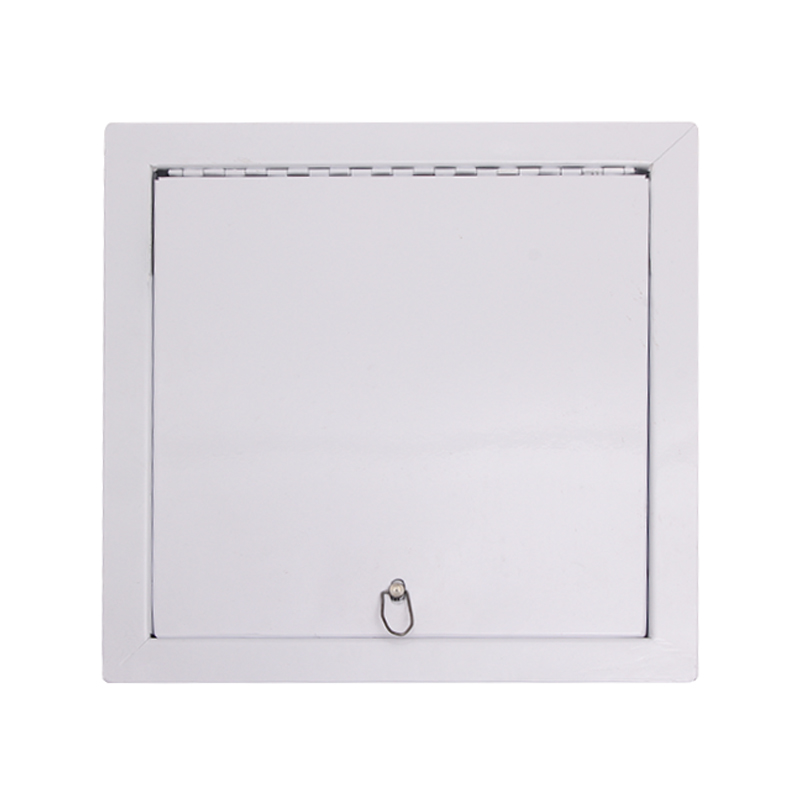
Steel access panels come with several locking and hinge options. A recessed push lock opens without tools, which is convenient for ceilings and service openings accessed regularly. A screwdriver-operated recessed lock adds security because the door cannot be opened accidentally. Heavy-duty concealed hinges matter most for large or frequently used openings.
Steel is not always the right material. Aluminum suits coastal and high-humidity environments where corrosion resistance matters more than raw strength. Plastic panels are the lightest and cheapest option but are not acceptable for fire-rated assemblies or heavy service areas. The table below summarizes the practical differences.
| Property | Steel | Aluminum | Plastic |
|---|---|---|---|
| Structural strength | High | Medium | Low |
| Fire-resistance options | Wide range | Limited | Not available |
| Corrosion resistance | Good with coating | Excellent | Excellent |
| Weight | Heaviest | Light | Lightest |
| Typical cost | Mid | Higher | Low |
| Common uses | Fire-rated walls, plant rooms, corridors | Bathrooms, coastal buildings | Light ceilings, dry indoor spaces |
For a deeper look at the trade-offs, our engineers prepared a more detailed steel vs. aluminum comparison for buyers who need to justify a material choice on cost and performance.
A fire-rated access panel must preserve the fire resistance of the wall or ceiling assembly in which it is installed. The steel frame holds the assembly together under heat, while a fire-resistant infill board and intumescent seals expand to close gaps during a fire. Ratings follow national standards, typically ASTM E119 / UL 263 in North America and EN 1634 or equivalent test methods in Europe.
Two facts matter most: the panel must match the fire-resistance rating of the surrounding assembly, and the installation must follow the approved detail. An incorrectly cut opening or missing sealant can turn a rated panel into the weak point of an otherwise sound barrier.
Fire-rated steel access panels combine a steel frame and door with a non-combustible or fire-resistant infill, usually fire-rated gypsum board, plus intumescent material along the door edges. The rating is valid only when the panel is installed in a wall or ceiling construction that matches the tested configuration, including the same stud type, sheathing layers, and cavity insulation where required. A standard fire-rated steel access panel in this class is available in several sizes to match common wall assemblies.
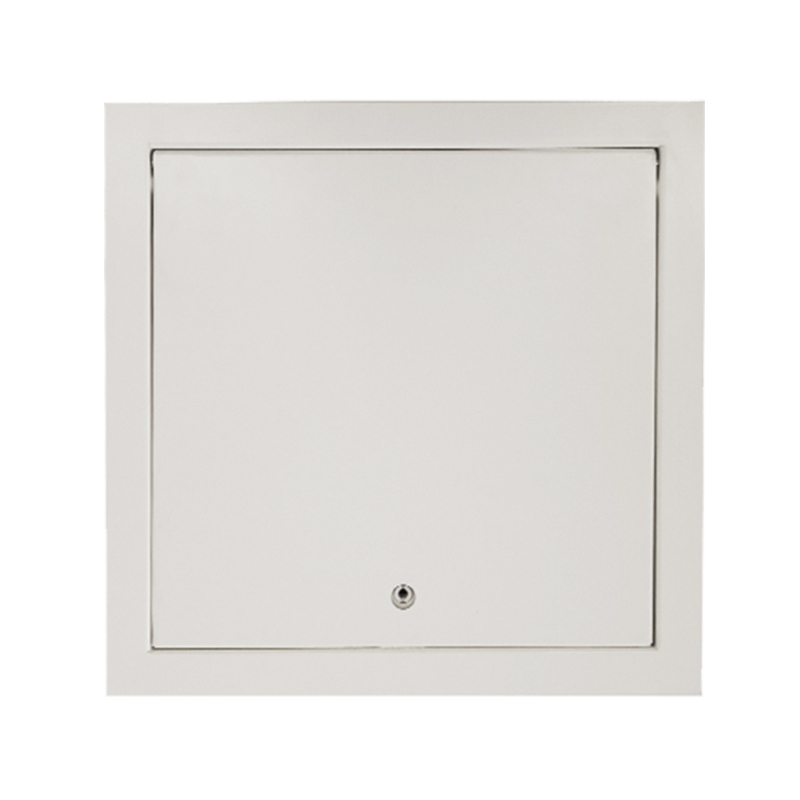 Wholesale SS-AP111 Fire Rated Access Panel Suppliers, CompanyZhejiang Shunshi Intelligent Technology Co., Ltd is top China Wholesale SS-AP111 Fire Rated Access Panel Suppliers and Company, details: ...View Product →
Oversized openings leave gaps that flames can pass through. Missing or misplaced intumescent seals break the fire barrier. Insufficient screw spacing around the frame weakens the mechanical connection. Anyone installing a rated panel should review a fire-rated access panel installation guide before starting the job.
Most manufacturers hold a set of standard steel access panel sizes, and Shunshi is no exception. Common inch-based sizes run from 6 x 6 in. up to 24 x 24 in., with metric equivalents from 150 x 150 mm to 600 x 600 mm or larger. Square panels dominate wall and ceiling applications, while rectangular panels suit pipe and duct access where the opening follows the service layout.
The panel should follow the equipment behind it. Valves, actuators, dampers, and fire dampers each have clearance requirements, and the opening must let a hand or tool reach the service point comfortably. When in doubt, choose the next larger standard size so maintenance staff are not working through a tight opening.
Rectangular panels are not always the answer. Access doors for HVAC ducts are often round or oval so the panel follows the duct profile and keeps insulation coverage intact. Galvanized steel is the standard material because it matches the ductwork and handles condensation without degrading.
Steel panels appear wherever building services need maintenance access through a finished surface. The most common locations are:
In plant rooms, a heavy-duty galvanized steel access panel resists impact and repeated use better than any lighter alternative. Shunshi builds this heavy-duty galvanized steel access panel with a thicker frame and reinforced construction for exactly these conditions.
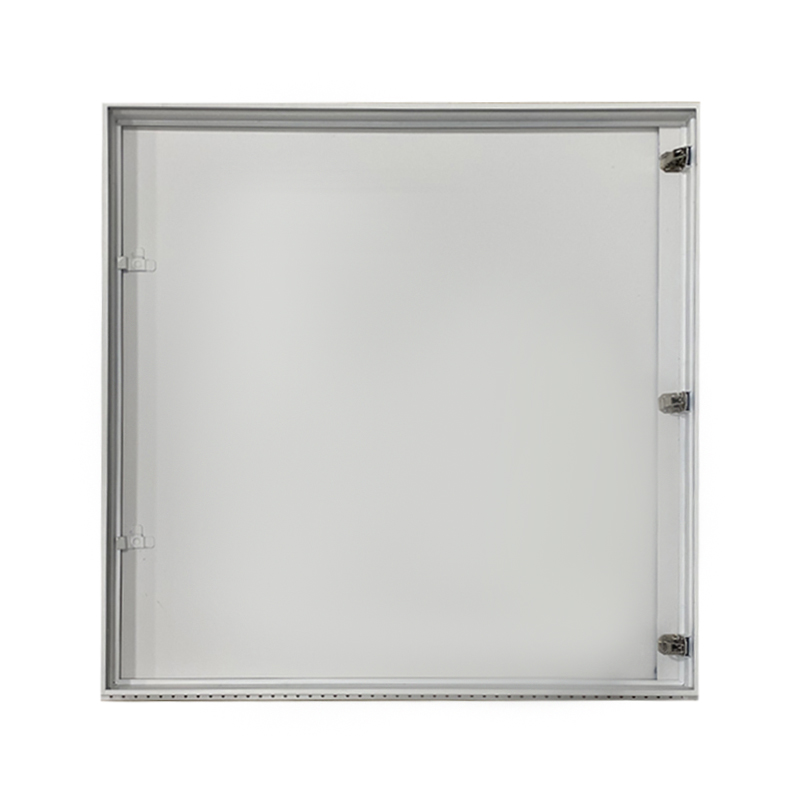 Wholesale SS-AP401 Strong Heavy Duty Galvanized Access Panel New Design SupplierZhejiang Shunshi Intelligent Technology Co., Ltd is top China Wholesale SS-AP401 Strong Heavy Duty Galvanized Access Panel New Design Sup...View Product →
For importers, distributors, and project suppliers, steel access panels are a repeat-purchase product. Quality varies significantly between factories, and three factors usually determine whether containers arrive consistent.
Ask the factory for the exact frame thickness and coating specification. Standard steel panels typically use a 1.0 mm or 1.2 mm frame, while heavy-duty versions step up further. Powder coating thickness, adhesion, and color consistency across production runs matter because panels from different batches may end up on the same project.
You do not need to inspect every batch, but you should know how the factory checks dimensions, welds, hinge alignment, and lock function. Require a written quality control process and agree on defect standards before production starts. Our access panel quality control guide explains what wholesale buyers should look for during a factory audit and pre-shipment inspection.
Minimum order quantities are usually volume-based, and packaging must protect flanges and hinges during sea freight. If you plan to sell under your own brand, confirm that the factory offers OEM printing, custom packaging, or design modifications. Shunshi supports standard wholesale orders and OEM/ODM projects, with an in-house R&D team behind the product lines.
Start with the application. Fire-rated wall? Choose a rated steel panel with the correct certification and install it according to the approved detail. Plaster or drywall ceiling? Select a gypsum-faced steel panel so the finish stays clean. Heavy service room? Use a heavy-duty galvanized frame.
Steel access panels are a small component, but they sit inside some of the most important assemblies in a building. Specifying the right one, and sourcing it from a factory that controls quality, prevents callbacks, rework, and fire-safety liability. Shunshi has manufactured steel access panels for export since 2005, supplying contractors and distributors across Europe, North America, the Middle East, and Asia. If you are planning a bulk order, the team can match panel configuration, finish, fire rating, and size to your project requirements.

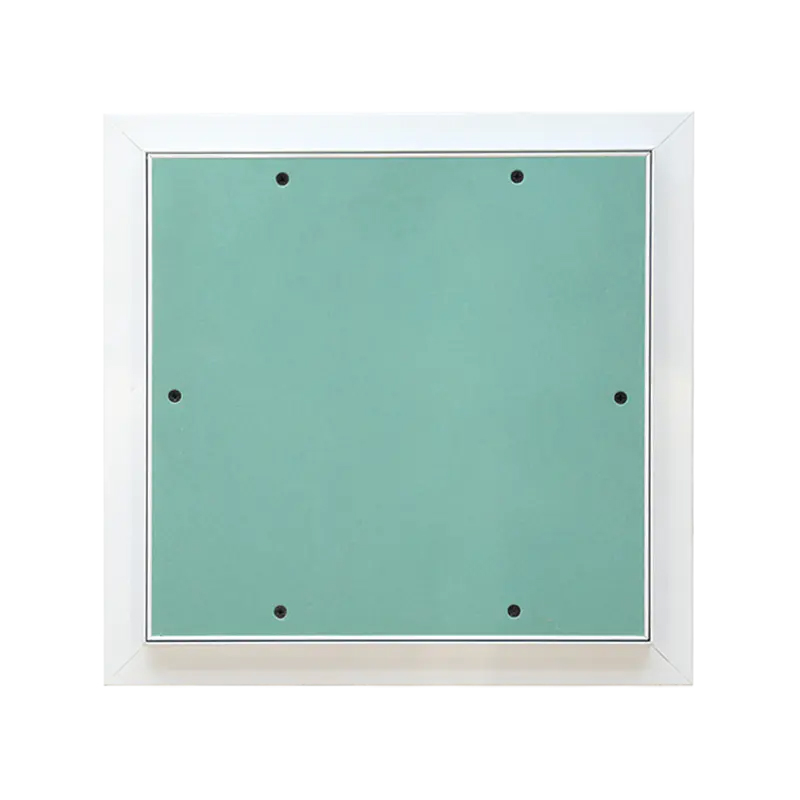

Contact Us
SHUNSHI provides a range of technical support services to ensure that customers are able to properly select, install and maintain these products.
Products
Access Panels GuideContact
Tel: 86-15988108762
86-572-8298792
Fax: 86-572-8298792
E-mail: [email protected]
No.281 Mingzhu Main Road, Leidian Town, Deqing, Huzhou, Zhejiang, China, 313219

 English
 Español
 عربى
عربى