English

In modern construction, maintaining the aesthetic integrity of ceilings and walls while providing unobstructed access to plumbing, electrical, and HVAC systems is a critical engineering challenge. The white plastic access panel has evolved from a simple utility cover to a precision-engineered component that must meet stringent fire, moisture, and security standards. This article provides a technical deep dive for architects, facility managers, and procurement specialists, examining material science, installation protocols, and performance specifications.
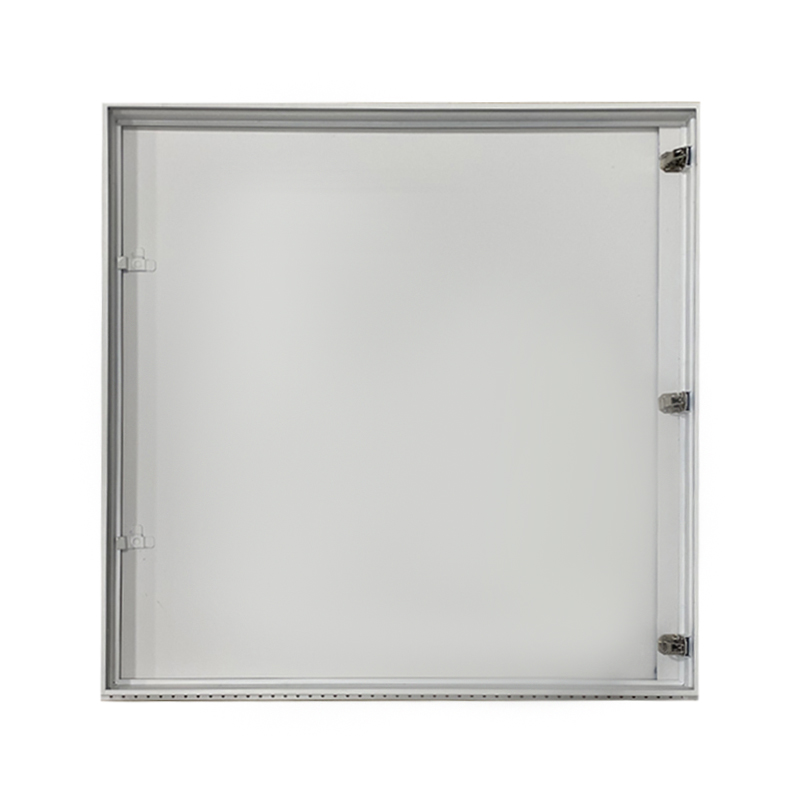
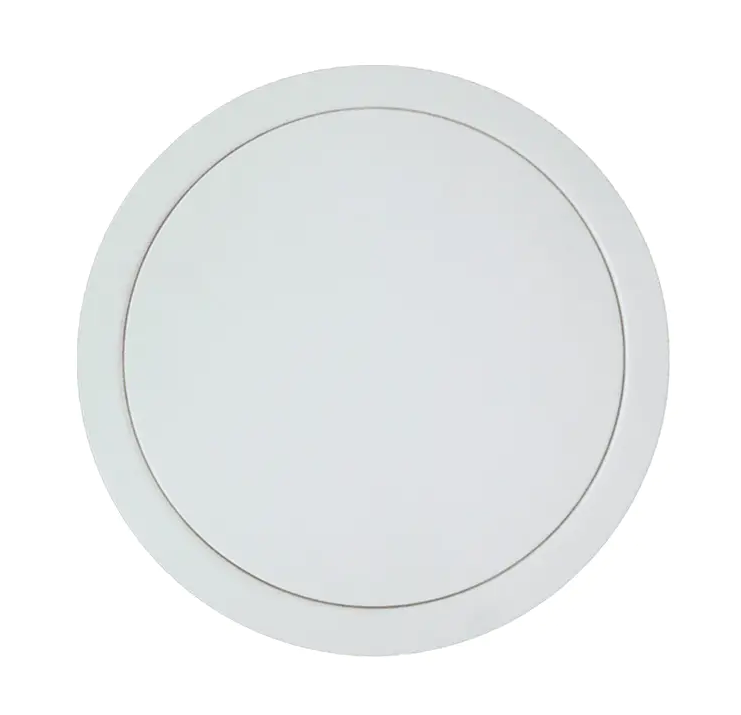
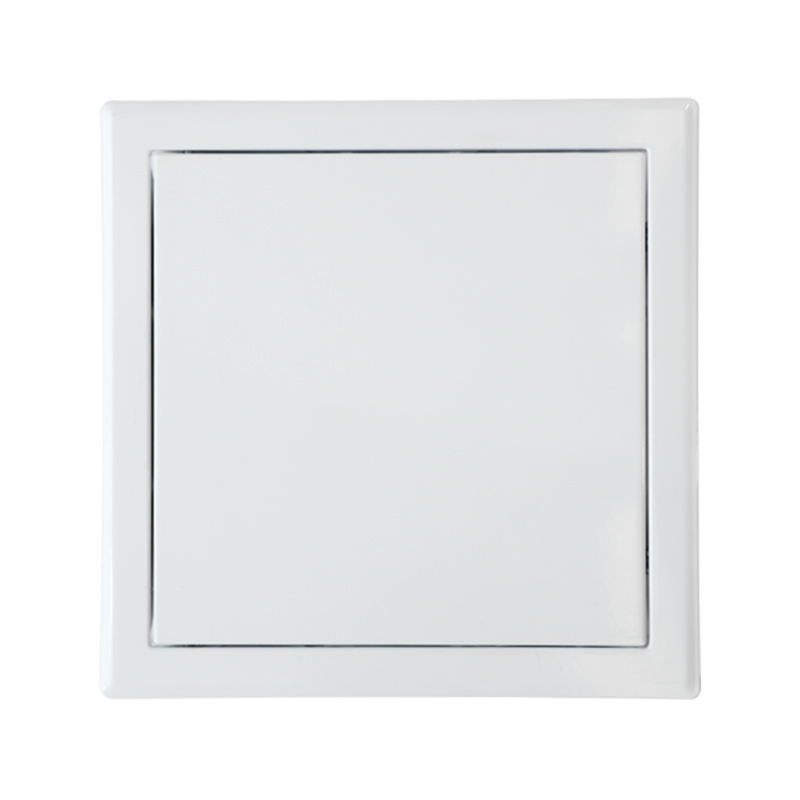
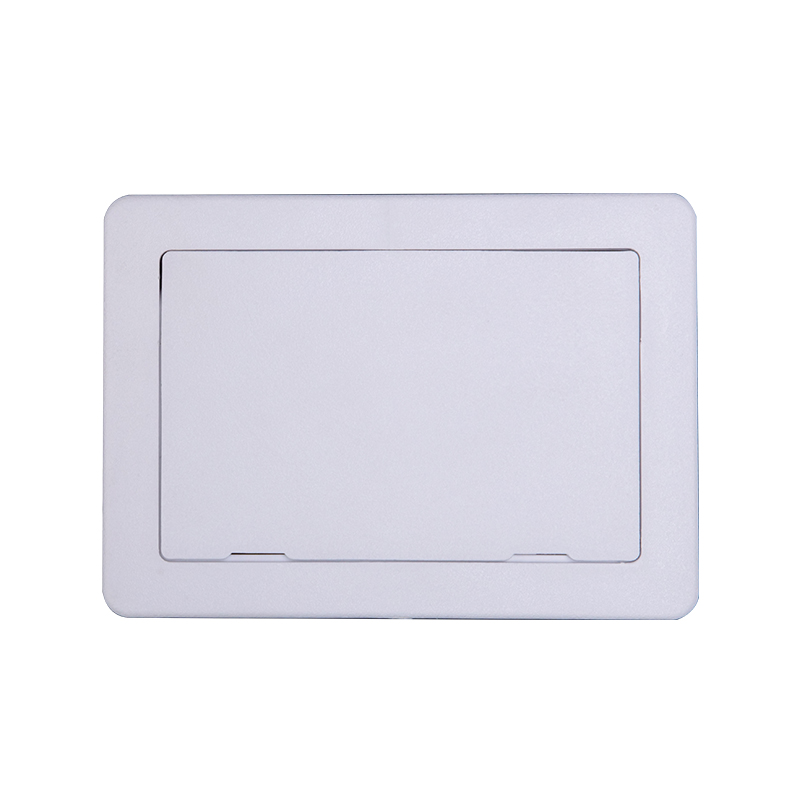
A white plastic access panel is a removable or hinged door, typically manufactured from high-impact ABS (Acrylonitrile Butadiene Styrene) or UV-stabilized polypropylene, designed to provide service entry to building systems. Unlike traditional metal panels, modern plastic variants leverage advanced polymer engineering to overcome corrosion and weight limitations. The choice of material is not merely a cost decision; it is a functional specification.
To understand the engineering rationale behind specifying plastic, a comparative analysis of material properties is essential. The table below contrasts typical ABS plastic panels with standard galvanized steel panels based on key performance indicators relevant to building services.
| Property / Specification | White Plastic (ABS/Polypropylene) | Galvanized Steel |
|---|---|---|
| Corrosion Resistance | Excellent; inert to moisture, salts, and most building chemicals. Ideal for coastal or high-humidity environments. | Moderate; prone to galvanic corrosion and "white rust" in damp conditions without additional coating. |
| Thermal Conductivity (k-value) | Low (~0.2 W/m·K), minimizing thermal bridging and condensation risk on cold surfaces. | High (~50 W/m·K), can act as a thermal bridge, leading to condensation in insulated envelopes. |
| Weight (per 600x600mm panel) | Approx. 1.2 - 1.8 kg, reducing load on ceiling grids and allowing single-person installation. | Approx. 3.5 - 5.0 kg, requiring additional support and handling equipment. |
| Impact Resistance (IZOD) | High; ABS typically ranges from 200-400 J/m, capable of withstanding accidental maintenance impacts. | High, but susceptible to denting and permanent deformation. |
| Fire Rating (UL94) | Typically HB to V-0; self-extinguishing grades available for plenum spaces. | Non-combustible, but coating can burn. |
| Aesthetic Integration | Color is molded through; scratches do not reveal bare metal. Pre-finished white matches most ceilings. | Requires painting; scratches require touch-up to prevent rust. |
The data confirms that for environments where moisture, thermal efficiency, and long-term appearance are priorities, the white plastic access panel offers distinct engineering advantages over its metal counterparts.
When specifying a white plastic access panel for ceiling, the primary considerations shift from structural support (as in walls) to integration with ceiling grids and fire-rated assemblies. Ceiling panels often require specific latching mechanisms to remain flush and secure against gravity.
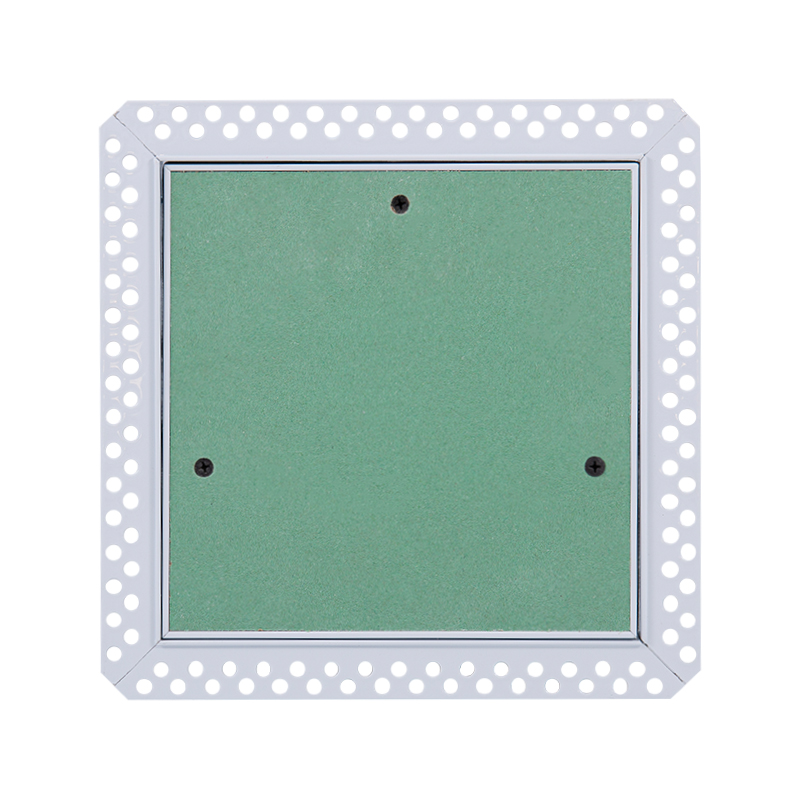
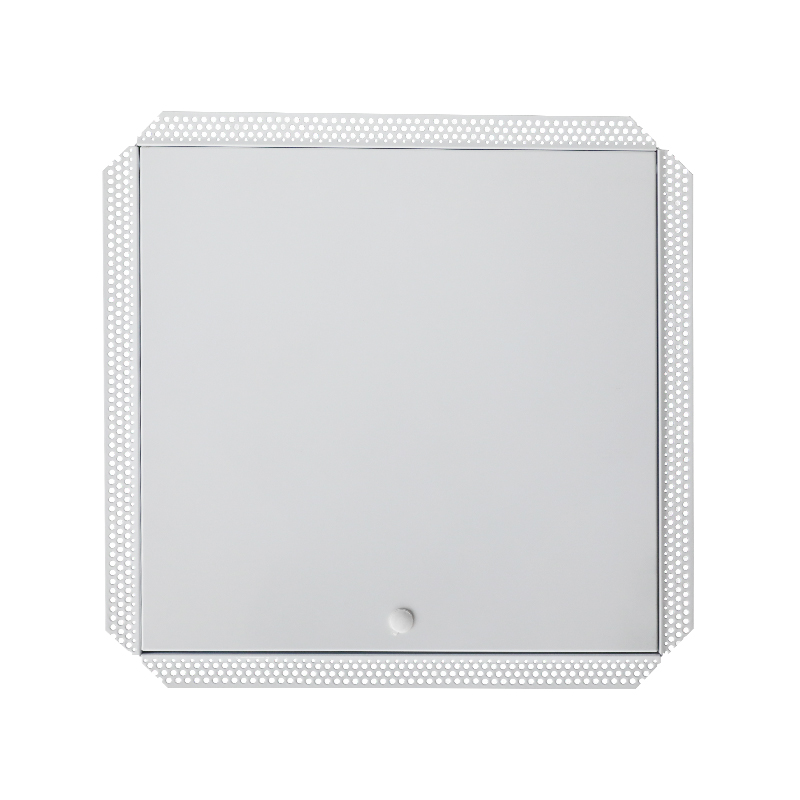
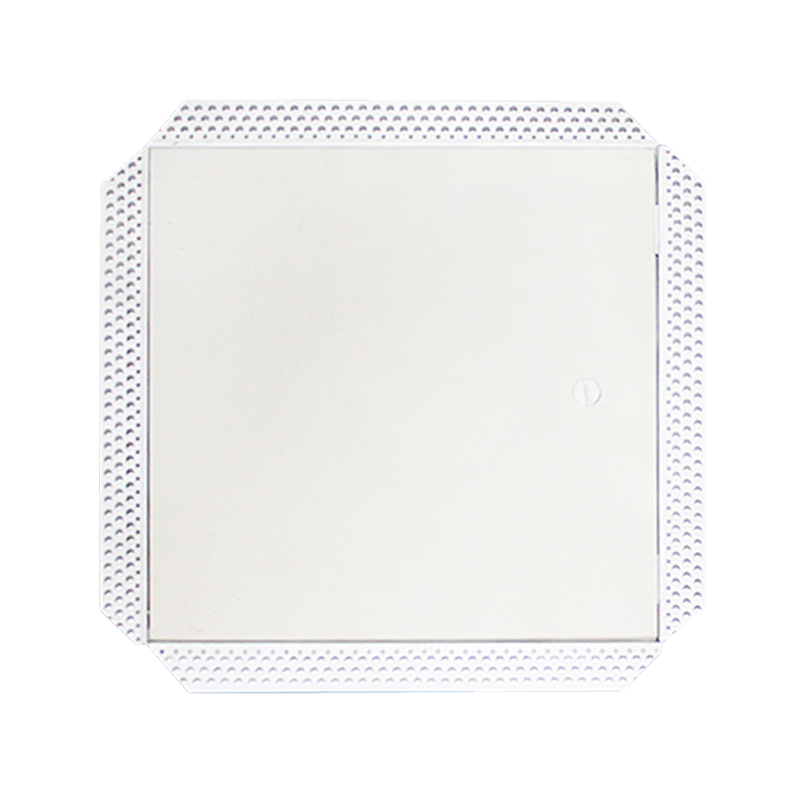
Panels designed for ceilings often incorporate spring-loaded latches or cam locks that hold the door firmly closed without visible screws. For suspended ceilings, panels must be compatible with T-bar grid systems, often featuring overlapping flanges that conceal the cut edge of the ceiling tile. For gypsum board ceilings, a mounting frame with plaster "ears" or mud rings is used to create a seamless finish. The panel's low weight (typically <2 kg/m²) is crucial here to prevent sagging of the ceiling structure .
The demand for flawless aesthetic integration is highest in luxury developments. For instance, projects with the finish standards required for landmarks like the Royal Office of Qatar demand panels with zero light gap and perfect color matching. In such cases, the white plastic access panel for ceiling must have a low-reflectance matte finish and gasketed edges to prevent light bleed from the plenum above, ensuring the ceiling plane appears uninterrupted .
Understanding the size of white plastic access panel required is a fundamental step in specification. While manufacturers offer a range of standard dimensions, complex building layouts often necessitate custom sizes to align with specific utility placements or architectural modules.
The following table lists standard metric and imperial sizes commonly available, along with the recommended rough opening dimensions. These sizes are designed to fit between standard stud centers (e.g., 400mm or 600mm) or to replace common ceiling tile sizes.
| Nominal Panel Size (mm) | Nominal Panel Size (inches) | Recommended Rough Opening (mm) | Typical Application |
|---|---|---|---|
| 150 x 150 | 6 x 6 | 152 x 152 | Single valve or cleanout access |
| 300 x 300 | 12 x 12 | 302 x 302 | Electrical junction boxes, small pumps |
| 450 x 450 | 18 x 18 | 452 x 452 | HVAC damper actuators, larger valves |
| 600 x 600 | 24 x 24 | 602 x 602 | Standard ceiling tile replacement, large equipment access |
| 1200 x 600 | 48 x 24 | 1202 x 602 | Ductwork access, full ceiling module |
For non-standard requirements, such as aligning with unique tile patterns or oversized equipment, manufacturers with in-house R&D and tooling capabilities, like those holding multiple patents in panel design, can produce custom molds. When specifying a custom size of white plastic access panel, it is critical to provide the exact finished opening dimension, as plastic panels have a coefficient of thermal expansion that must be accounted for in the frame design to prevent buckling or gap formation in extreme temperatures .
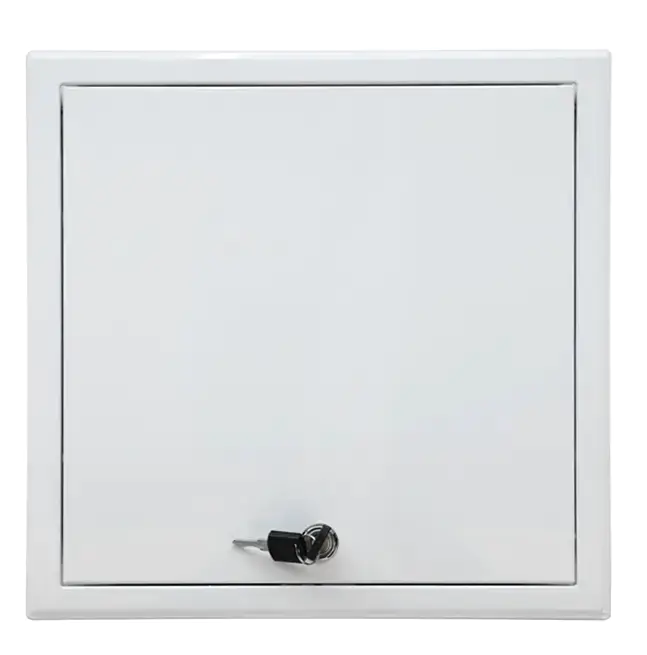
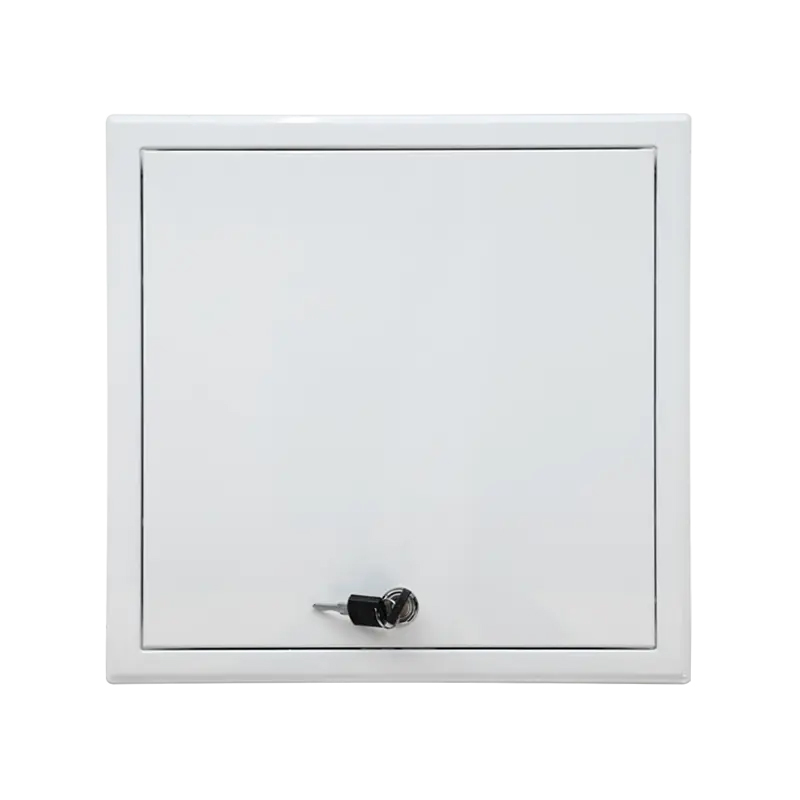
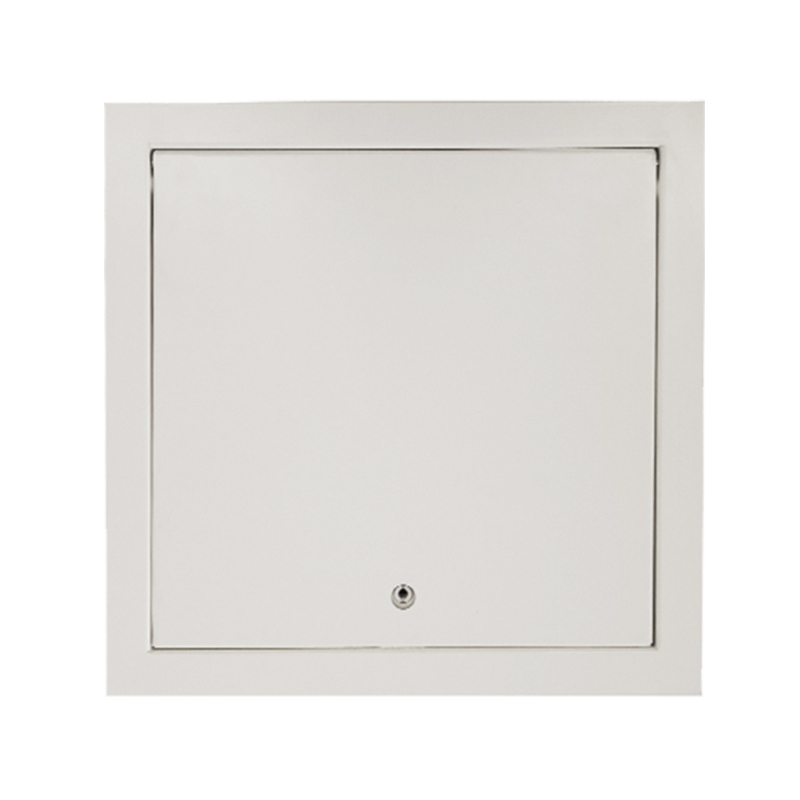
Security is a growing concern in commercial and institutional buildings. A white plastic access panel with key lock provides a tamper-resistant barrier, preventing unauthorized access to critical utilities, medical gas valves, or security system controls. The engineering focus here is on the lock mechanism's durability and the panel's resistance to forced entry.
Lock mechanisms for plastic panels are typically constructed from zinc alloy or stainless steel to prevent corrosion. The locking strength, measured by the torque the lock can withstand, should exceed 2 Nm for standard security applications. For high-security needs, panels can be specified with recessed, pick-resistant locks and reinforced strike plates integrated into the frame .
In areas subject to splash, spray, or high humidity, specifying a waterproof white plastic access panel is not optional—it is a code requirement to prevent moisture ingress into wall cavities, which can lead to mold growth and structural decay. The term "waterproof" in engineering terms refers to an Ingress Protection (IP) rating.
A true waterproof panel features a compressible gasket—typically EPDM or silicone—that seals the gap between the door and the frame when closed. This provides a barrier against both water and dust. The table below outlines common protection levels.
| IP Rating | Protection Level | Typical Application for Access Panel |
|---|---|---|
| IP54 | Limited dust ingress protection; protected against water splashing from any direction. | Kitchens, bathrooms (splash zones), sheltered outdoor areas. |
| IP65 | Dust-tight; protected against low-pressure water jets from any direction. | Commercial kitchens (wash-down areas), external walls, pool facilities. |
| IP66/67 | Dust-tight; protected against powerful water jets or temporary immersion. | Food processing plants, exterior grade, flood-prone areas. |
Material choice is paramount here. Unlike metal, plastic does not rust, but UV-resistant grades must be specified for any outdoor application to prevent brittleness. The gasket material must also be compatible with any cleaning chemicals used in the environment .
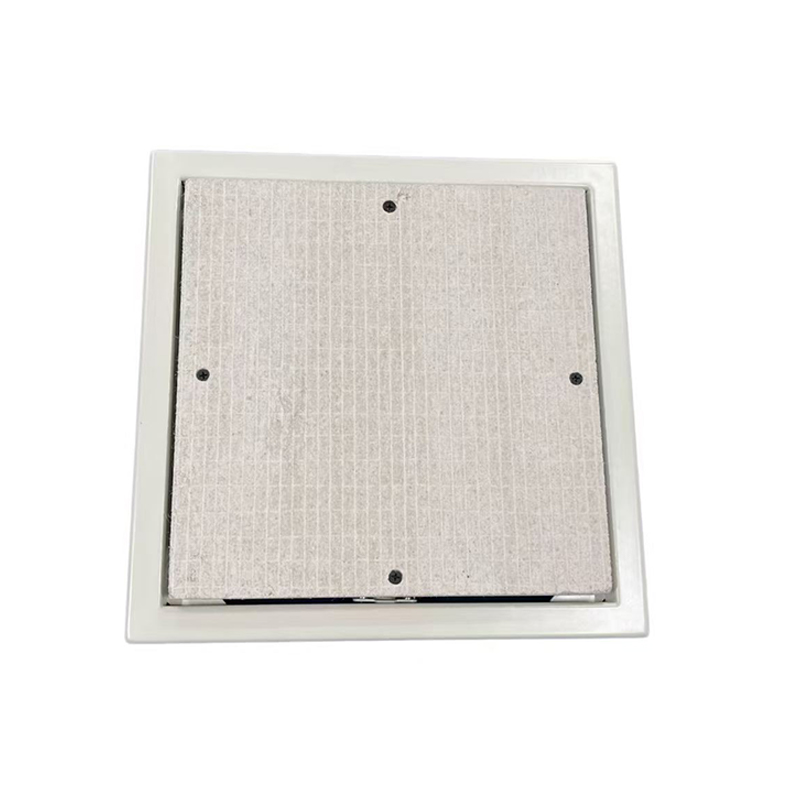
Correct installation of a white plastic access panel for drywall ensures both a professional finish and the long-term functionality of the panel. Drywall, being a relatively soft and friable material, requires specific techniques to secure the panel frame without causing damage.
The selection of a white plastic access panel involves a multi-faceted engineering decision. From assessing the need for a waterproof white plastic access panel in wet environments to specifying a white plastic access panel with key lock for security, each variable impacts the lifecycle performance of the building. Understanding the standard size of white plastic access panel and the nuances of installing a white plastic access panel for drywall versus for a white plastic access panel for ceiling ensures that the specification meets both functional and aesthetic requirements. By leveraging manufacturers with proven expertise and a global footprint in high-end projects, procurement professionals can secure components that deliver reliability and performance for decades.
Custom sizes can be manufactured up to approximately 2400mm x 1200mm (8ft x 4ft), depending on the material properties and the manufacturer's tooling capabilities. Larger panels may require additional reinforcement within the frame to prevent warping .
Yes, while the material is pre-colored white, it can be painted. For best adhesion, the surface should be lightly abraded with fine-grit sandpaper and primed with a plastic-compatible primer before applying a high-quality latex or acrylic paint. Spray painting typically yields the most even finish.
Many are available with UL94 V-0 ratings, indicating they will self-extinguish within 10 seconds after ignition. However, for use in a plenum (the space above a ceiling used for air circulation), local building codes may require a specific fire/smoke rating (e.g., ASTM E84 Class A). Always verify the panel's certification against your local code requirements .
Regular inspection of the gasket is recommended. The gasket should be clean and free from debris. Silicone-based lubricants can be applied sparingly to prevent the gasket from drying out and cracking. If the gasket is compressed permanently (taking a 'set'), it may need replacement, which is typically a user-serviceable part.
Standard plastic access panels are NOT designed as walk-on or step-on devices. They are for access only. Attempting to support a person's weight can lead to catastrophic failure and injury. If a walk-on surface is required, a heavy-duty, specifically designed floor access door must be specified.

Contact Us
SHUNSHI provides a range of technical support services to ensure that customers are able to properly select, install and maintain these products.
Products
Access Panels GuideContact
Tel: 86-15988108762
86-572-8298792
Fax: 86-572-8298792
E-mail: [email protected]
No.281 Mingzhu Main Road, Leidian Town, Deqing, Huzhou, Zhejiang, China, 313219

 English
 Español
 عربى
عربى